CANTONESE HOME COOKING
Cantonese Wonton Soup with Pork and Shrimp
广式鲜虾猪肉云吞汤
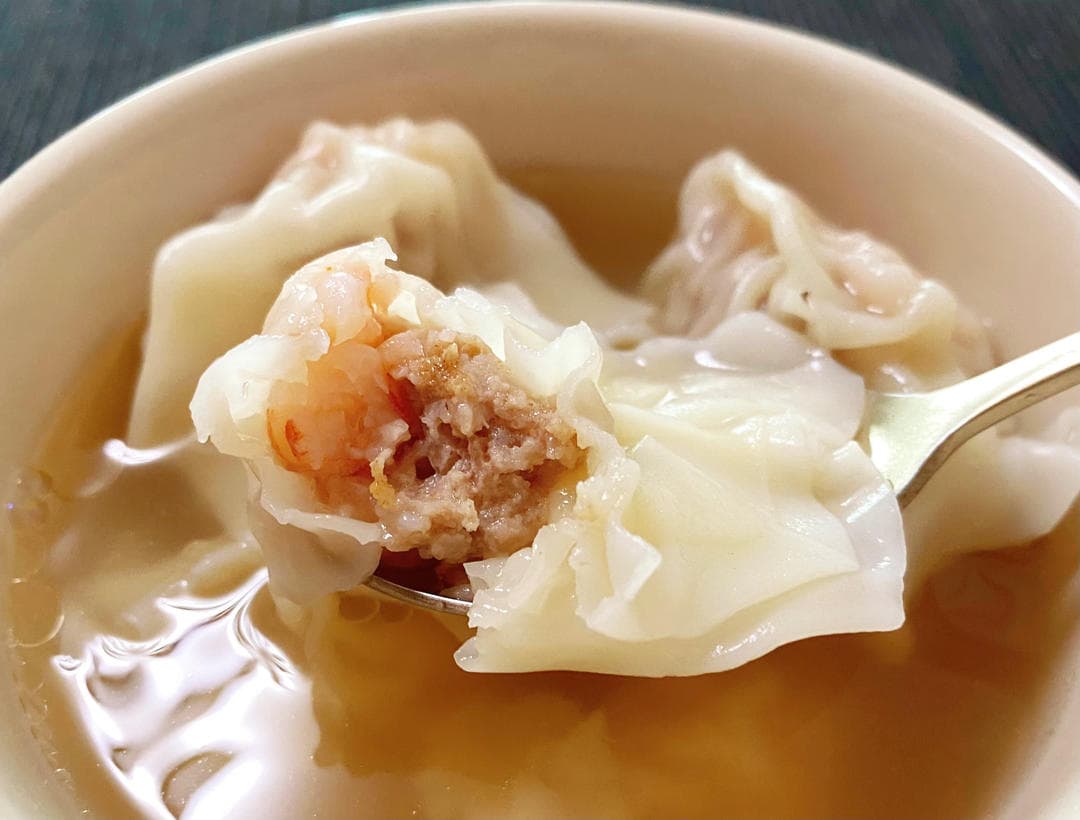
Thin wonton wrappers hold separate layers of seasoned pork and raw shrimp paste in this Cantonese wonton soup. A small pot of broth gets its flavor from dried seafood, ham and dried flatfish powder. Follow the filling, folding and gentle-boiling photos, with clear shopping names and a thermometer check for the center of the filling. This is wonton soup, without noodles.
Published
Jump to ingredients & steps ↓6 step-by-step photos · Tap any photo for a closer look.
Before you start
- Allow about 1 hour for the filling to chill, plus mixing, wrapping and cooking time. The 105-minute total is an editorial planning estimate, not a kitchen-tested timing; the broth can simmer during the chill.
- Have a small saucepan for the broth, a separate pot for boiling, a tray, a slotted spoon and a clean thin-tip digital food thermometer ready. This quantity makes about 32 small wontons and four small soup servings.
- For North American shopping, ask for ground pork, thin square wonton wrappers, dried scallops or conpoy, dried shrimp, dried shrimp roe and dried flatfish powder. Bring the Chinese names from the ingredient list if needed. Availability varies by shop.
- Hong Kong-style wonton wrapper is a useful package term. Twin Marquis describes its version as thin, square and 3.5 × 3.5 inches, thinner than its Shanghai-style wrapper. That is one product example, not a claim about the wrapper photographed here or every brand.
- Read the shrimp-paste label: use an uncooked shrimp-flesh mixture intended for hot pot or dumplings. Fermented shrimp paste is a concentrated seasoning and cannot replace 150 g of raw shrimp paste in this filling.
Let’s cook.
Season and mix the pork
Put the ground pork in a cold mixing bowl. Add the filling's 8 g flatfish powder, most of the 4 g dried shrimp roe, sugar, salt, light soy sauce and a little white pepper. Stir for about a minute. Add the 40 ml cold water and cornstarch, then stir until the mixture looks cohesive and sticky rather than loose and watery. Mix in the sesame oil last. Reserve a little of the measured roe for wrapping.
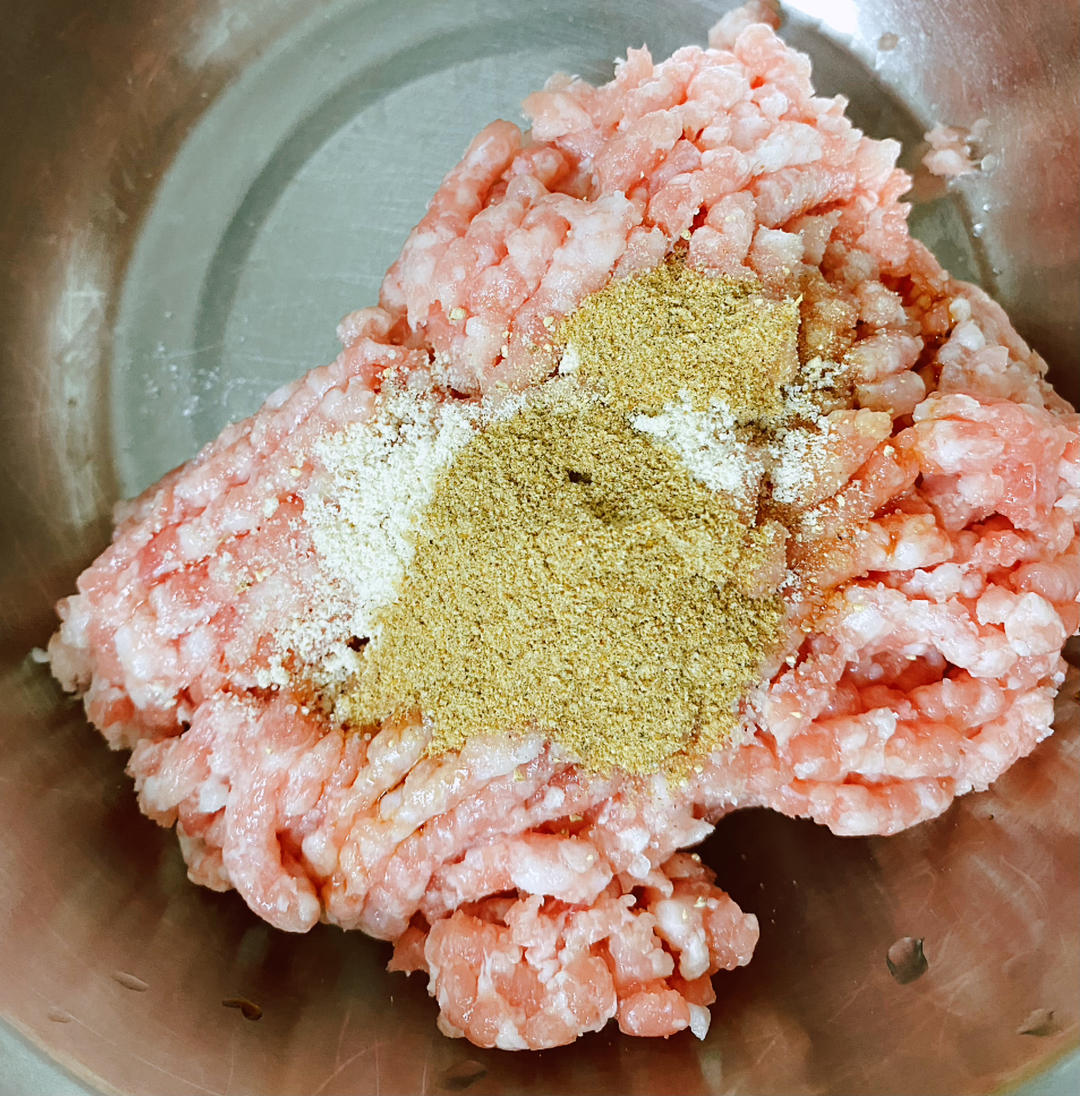
Look for thisThe filling should hold together on a spoon. Do not taste raw pork or raw shrimp to check seasoning.
Chill the filling and keep the shrimp separate
Cover the seasoned pork and refrigerate for 1 hour at 4°C / 40°F or below. Keep the raw shrimp paste chilled in a separate covered container. This recipe layers a little shrimp and a little pork in each wrapper rather than blending everything into one paste. If you need to check seasoning, cook a small sample completely and check its center reaches 74°C / 165°F before tasting.
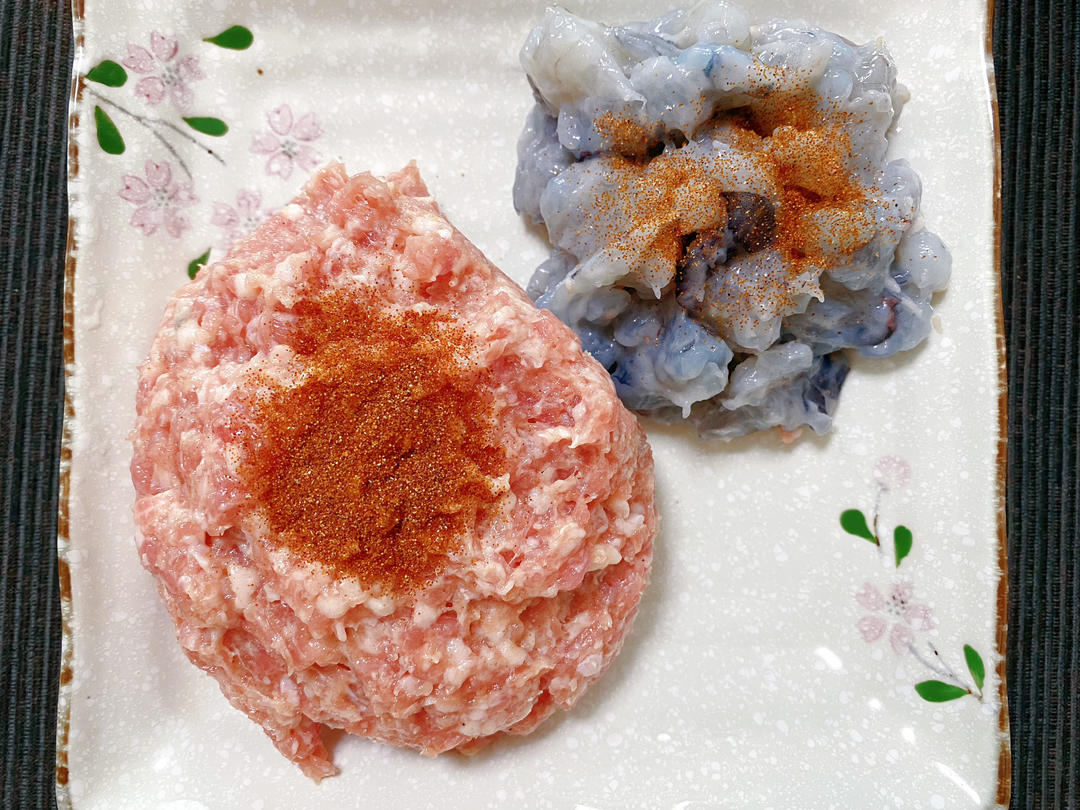
Look for thisThe photograph shows the two raw fillings side by side. It does not show cooked or ready-to-eat food.
Simmer the dried-seafood broth
While the filling chills, warm a small saucepan over low heat. Add a light sprinkle of the additional dried shrimp roe and stir briefly until fragrant; do not let it scorch. Carefully add the 800 ml water, ham, dried scallops and dried shrimp. Bring to a boil, then reduce to a very gentle simmer for about 30 minutes. Stir in the broth's 5 g flatfish powder. Taste the cooked broth before adding fish sauce, salt or white pepper. Add the optional lard and chopped yellow chives only if using, and keep the broth hot while you cook the wontons separately.
Look for thisThe broth starts with measured water and dried ingredients, not an unspecified stock cube. The source leaves the final seasoning unmeasured; add it gradually.
Fill and fold a thin wrapper
Work with a few wrappers at a time and keep the rest covered so they do not dry out. Put a little reserved shrimp roe in the center, followed by a small portion of raw shrimp paste and then pork. Aim to divide the fillings across about 32 wrappers; keep the edges clear. Lightly wet all four edges with clean water. Bring opposite corners together over the filling, then gather the sides inward and pinch the seam closed. Push out large air pockets gently without squeezing the filling through the skin.
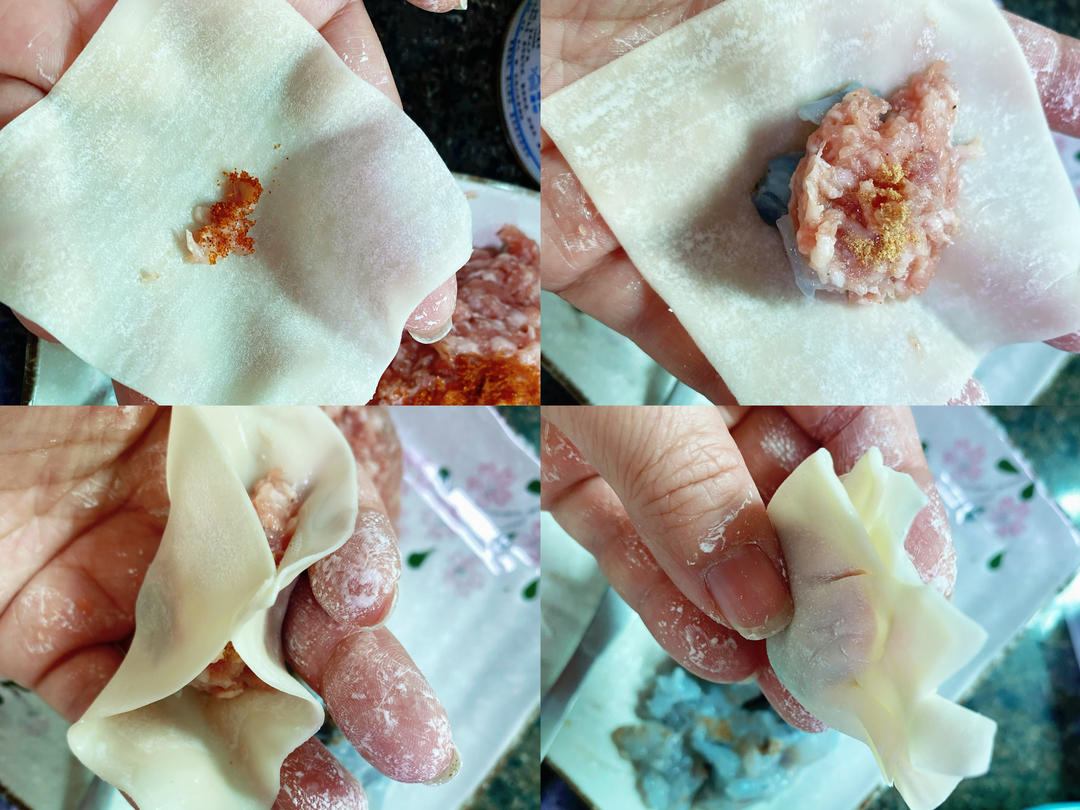
Look for thisFollow the four photo panels: a little roe, the two fillings, the lifted corners, then the sealed pouch. If the edges will not meet, remove some filling.
Arrange the uncooked wontons
Set each finished wonton on a dry tray with a little space between pieces. Check that the seam is closed and the thin wrapper is not torn. Repeat with the remaining filling. The source batch makes about 32; your count can vary with wrapper size and how much filling each holds. Keep completed wontons and unused filling chilled if you are not cooking them straight away.
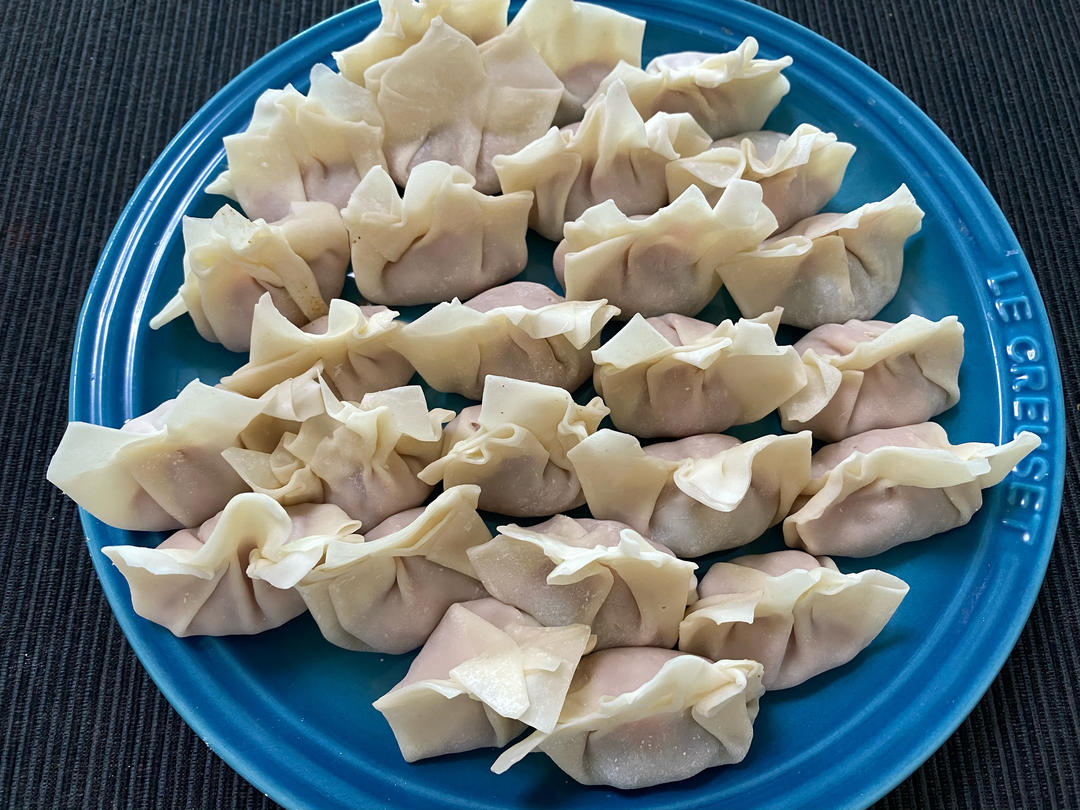
Look for thisThese pale parcels are still raw. Do not stack them or leave the whole batch at room temperature while you take a long break.
Boil gently and check the filling
Bring a separate pot of water to a boil, then reduce the heat enough to keep the thin wrappers from being battered by a rolling boil. Add the wontons in uncrowded batches. Gently slide a spoon underneath at the start to stop them sticking; do not stir roughly. The source begins checking small fresh wontons after about 3–4 minutes, but size, filling temperature and wrapper thickness change the time. Lift a wonton with a clean spoon and insert a thin-tip food thermometer into the middle of the filling. Check each piece before serving and continue cooking any that has not reached at least 74°C / 165°F. Follow a higher temperature or longer minimum cooking instruction on the shrimp-paste package if it specifies one.
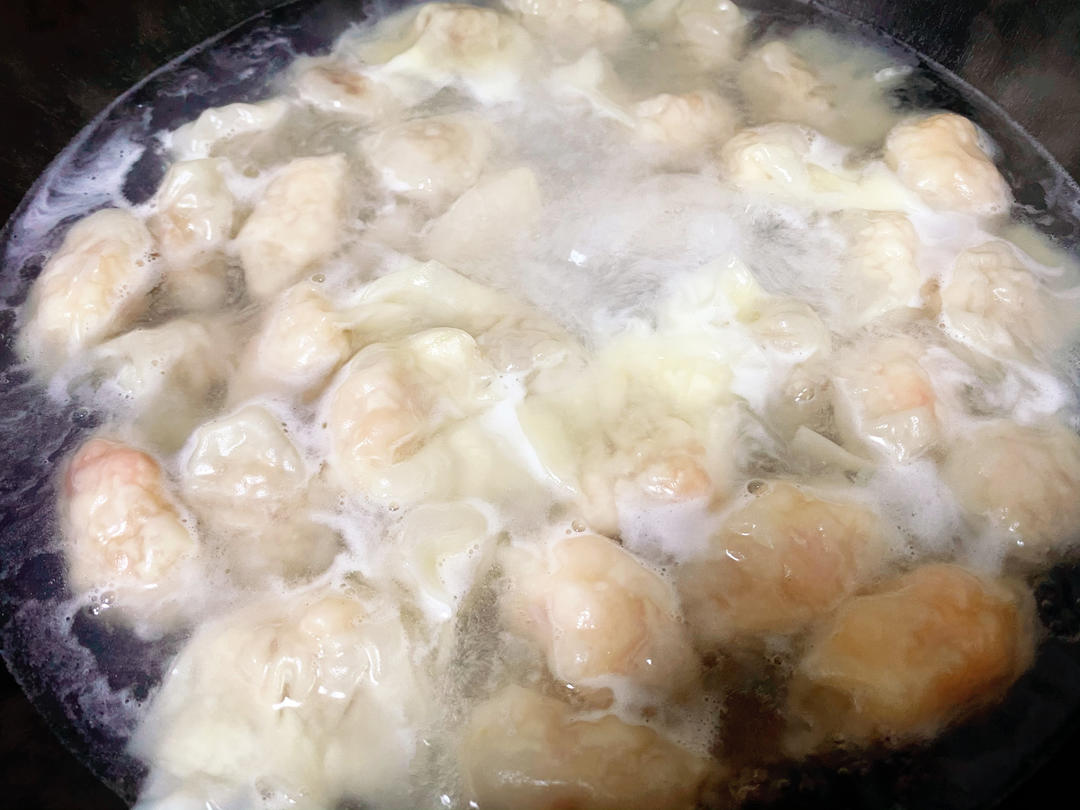
Look for thisFloating, a translucent wrapper and pink shrimp are not substitutes for a center-temperature check. Keep uncooked and cooked utensils separate.
Serve in the hot broth
Lift the cooked wontons out with a clean slotted spoon and divide among four small bowls. Ladle over the hot broth and serve promptly. Keep the boiling water separate from the serving broth. The result is a small serving of wonton soup with about eight wontons per bowl, not a noodle soup; no noodles are needed for this recipe.
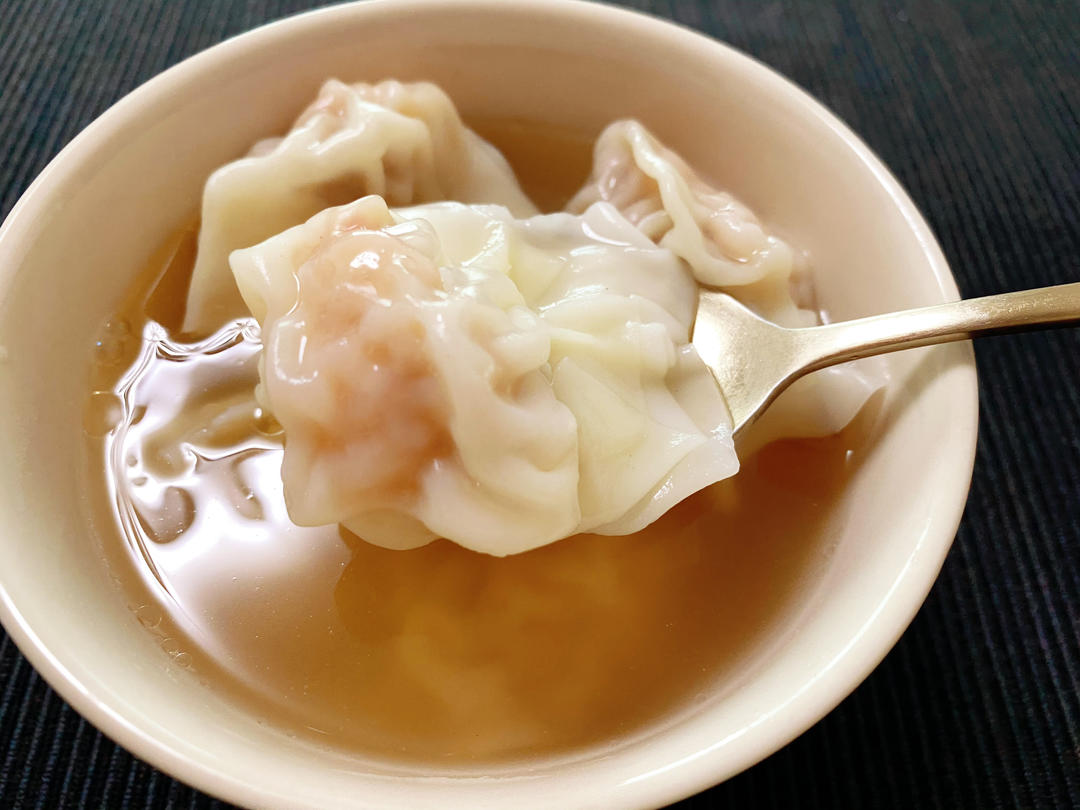
Look for thisThe finished source bowl has clear brown broth and no yellow-chive garnish. A finished-dish photo cannot establish the filling's temperature.
When it doesn’t go to plan
The wrappers split or leak
Use less filling, keep the sealing edges clean and lightly moistened, and press the seam closed. Cook in uncrowded batches at a controlled boil. Rough stirring and a strongly rolling boil can damage thin wrappers.
The filling is loose or watery
Measure the filling water separately from the soup water. Mix until the pork binds before the chilled rest, and check that the shrimp paste is a raw filling product rather than a liquid condiment. Do not add more liquid just to use up a package.
The soup tastes too salty
Ham, fish powder, dried seafood and fish sauce can all add salt. Taste the cooked broth before final seasoning. Dilute an overly salty broth with a little hot water, accepting a lighter seafood flavor; do not add more salt automatically.
The wontons float but the filling is not ready
Continue gentle cooking and use a clean thin-tip thermometer in the center. Floating is not a reliable endpoint for a raw pork-and-shrimp filling, especially if parcels are larger or colder than the source batch.
Small details, better cooking.
- This version uses dried flatfish powder and a small dried-seafood broth. It is not a universal definition of all Cantonese wontons, and it does not promise to reproduce a particular restaurant's soup.
- Dried shrimp roe and whole dried shrimp are separate ingredients with separate amounts. The fish powder also has separate filling and broth portions; do not put the entire quantity into either one.
- A larger serving multiplier changes ingredient quantities, not the time needed to cook through each wonton. Use more batches and check the filling again.
- Refrigerate leftovers in shallow covered containers within 2 hours at 4°C / 40°F or below. Reheat the soup and wontons thoroughly once, checking the filling reaches 74°C / 165°F. Wrapper texture softens during storage.
Working with what you have
A particular brand of thin square wonton wrapper
Another thin square wonton wrapper suitable for boiling
Read the label and cooking directions. A thicker round dumpling wrapper changes the fold, texture and cooking time; it is not an equal-time replacement.
Optional lard and yellow Chinese chives
Omit either or both
The soup will lose some richness or chive aroma. The source's finished photos already omit the chives.
Seasoned raw shrimp paste
No automatic condiment substitution
Fermented shrimp paste is not suitable. Plain chopped shrimp has a different seasoning and binding balance; this guide does not provide a tested one-for-one reformulation.
Dried flatfish powder, ham and dried-seafood broth
A different broth requires a separate seasoning decision
Do not call plain chicken stock identical to the broth pictured here. If these ingredients are unavailable, treat a stock-based bowl as a different adaptation rather than adding arbitrary quantities to this recipe.
Need a unit conversion? Open kitchen tools. For ingredients, visit the pantry.
For a roast-pork main, try oven char siu with honey glaze.
Questions from the kitchen
What is in this Cantonese wonton soup?
The wrappers hold ground pork and uncooked seasoned shrimp paste in separate layers. The soup uses water, Chinese dry-cured ham, dried scallops, dried shrimp and dried flatfish powder. This version is served without noodles.
Which wonton wrappers should I buy in the US or Canada?
Look for thin square wonton wrappers, sometimes labelled Hong Kong style. As one manufacturer example, Twin Marquis describes a thin 3.5-inch square wrapper. Check the package directions and ingredients; round potsticker or gyoza wrappers are not the same thickness or shape.
Does shrimp paste mean fermented shrimp paste?
No. Here it means uncooked shrimp flesh prepared as a dumpling or hot-pot filling, called 虾滑 or xia hua. The source uses a seasoned store-bought version. Fermented shrimp paste is a salty condiment and must not be used as the 150 g filling ingredient.
How long do fresh pork and shrimp wontons take to cook?
The source starts checking its small fresh wontons after about 3–4 minutes. That is not a guaranteed safe cooking time. Size, starting temperature and wrapper thickness differ; use a clean thin-tip thermometer in the filling and reach at least 74°C / 165°F, or the higher requirement stated on the shrimp-paste package.
Is wonton soup the same as wonton noodle soup?
No. Wonton noodle soup includes noodles as well as wontons and broth. This recipe makes the soup and wontons only; its amounts and pictures do not include a portion of noodles.
Can I use the same cooking time for frozen wontons?
No. The 3–4 minute starting check applies to the source's small freshly wrapped wontons. This guide has no tested frozen cooking schedule. Follow any applicable package guidance and verify the filling's center temperature rather than assuming the fresh timing transfers.
Why boil the wontons in a separate pot?
The source cooks the wontons separately from the dried-seafood broth. Lifting the finished wontons into the serving soup keeps the wrapper-cooking water out of that measured broth.
Prefer to send a private correction?
FROM YOUR KITCHEN
Made it? Make it yours.
Share your plate, tell us what you changed, or ask a cooking question. Your experience can help the next home cook.
Kitchen notes 0
The table is ready for your first plate.
No public notes yet. A home-cooked result does not have to look perfect to be worth sharing.
Next on the table
 01
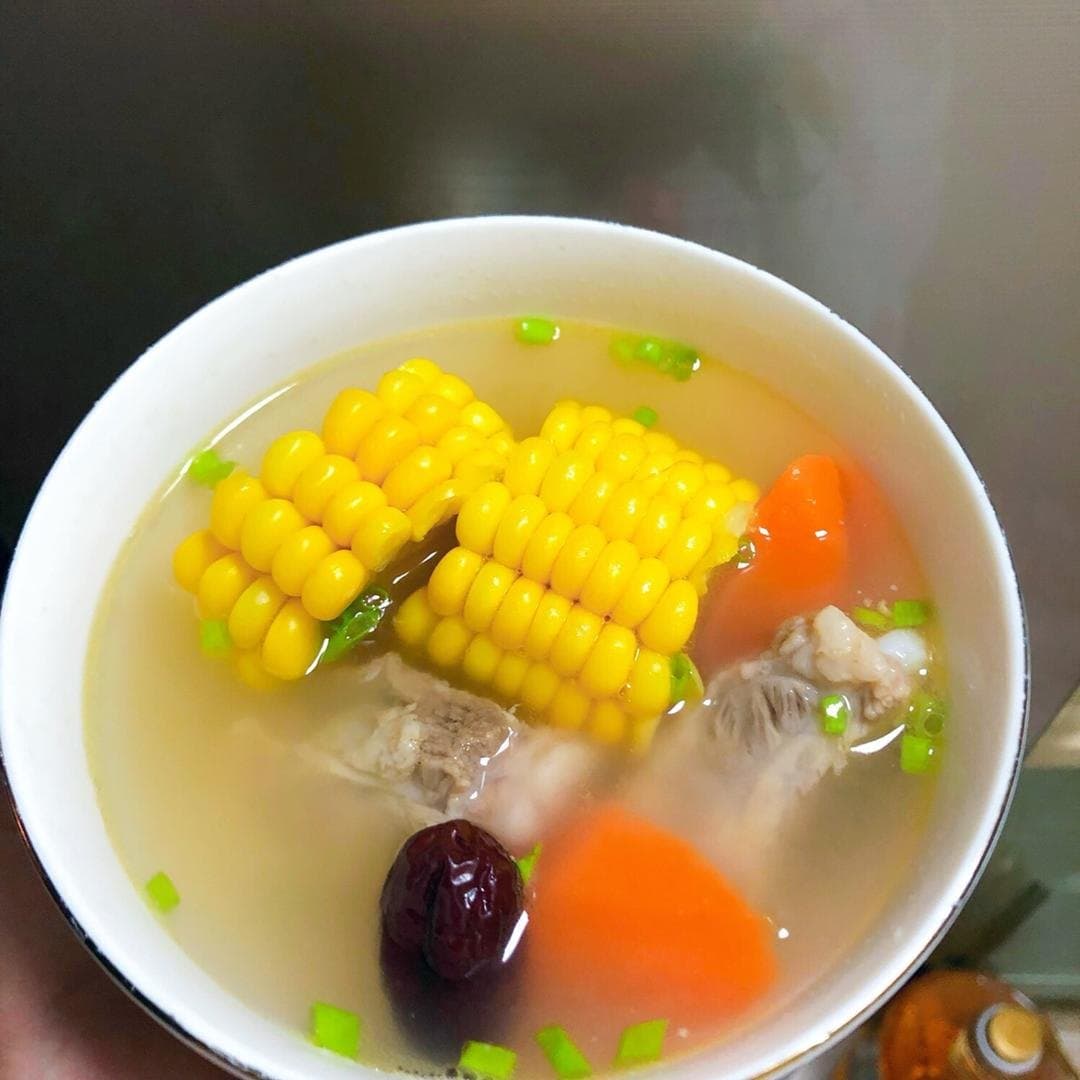
01Chinese Corn, Carrot and Pork Rib Soup
A gently simmered pork rib soup with sweet corn, carrots, ginger and optional red dates. The illustrated guide explains which ribs to buy, why to blanch them, and when to add the vegetables. This home-style soup fits a Cantonese meal without needing a clay pot.
 02
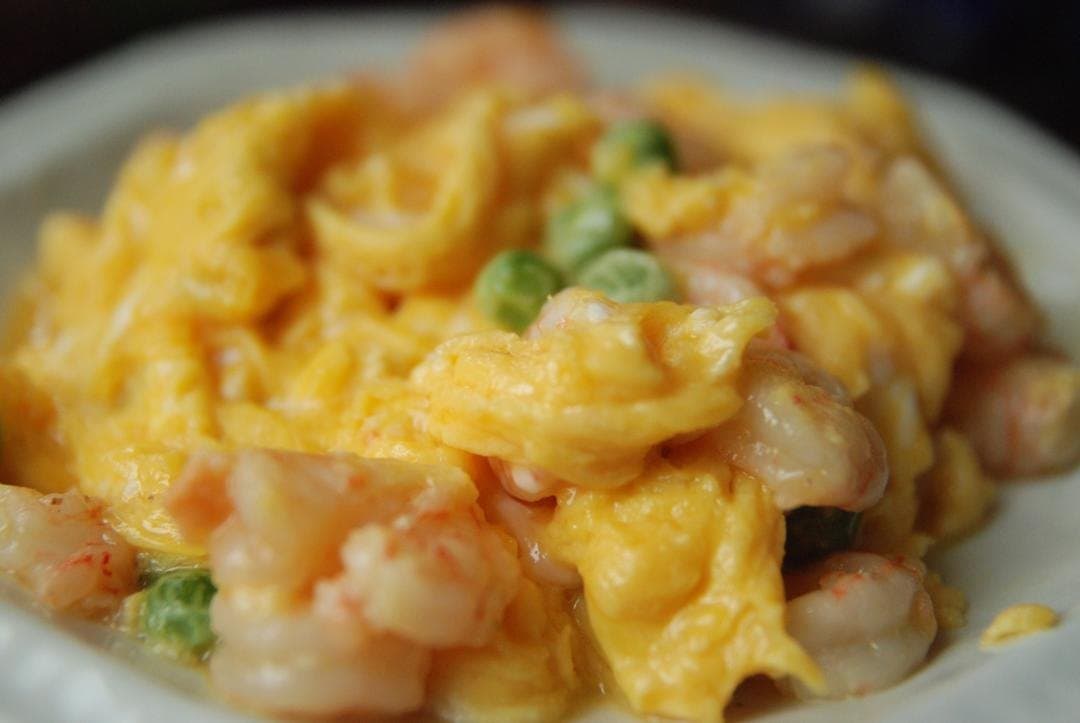
02Cantonese Shrimp and Scrambled Eggs
Tender egg folds with shrimp, made in two cooking stages: cook the shrimp first, then gently fold them through the eggs. This illustrated home version needs no milk, cream or cornstarch slurry, and explains how to keep the eggs moist without leaving them runny.
 03
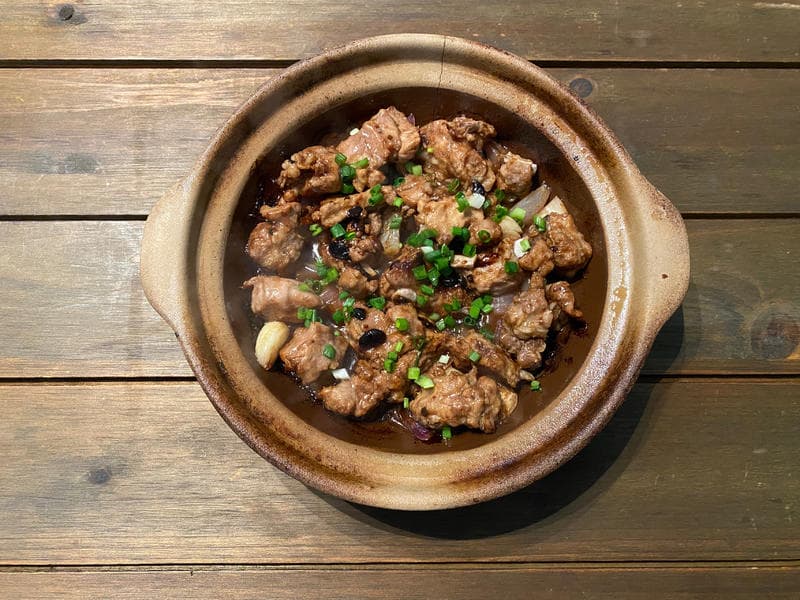
03Cantonese Sizzling Pork Ribs (Jue Jue Bao)
Cantonese sizzling pork ribs, or jue jue bao, cook over onion, ginger and garlic in a covered pot. A black bean marinade gives these Guangdong-style ribs their savory depth; moderate heat keeps the onion base from burning.