CANTONESE HOME COOKING
Cantonese Char Siu (Oven-Roasted Chinese BBQ Pork)
蜜汁叉烧肉(烤箱版)
Make Cantonese char siu in a home oven with pork belly, prepared char siu sauce and a thin honey glaze. This small-batch Chinese BBQ pork recipe includes a two-hour refrigerated marinade, photographs of the ingredients and roasting stages, and clear temperature checks. It is a jar-sauce version, not a from-scratch barbecue sauce.
Published
Jump to ingredients & steps ↓6 step-by-step photos · Tap any photo for a closer look.
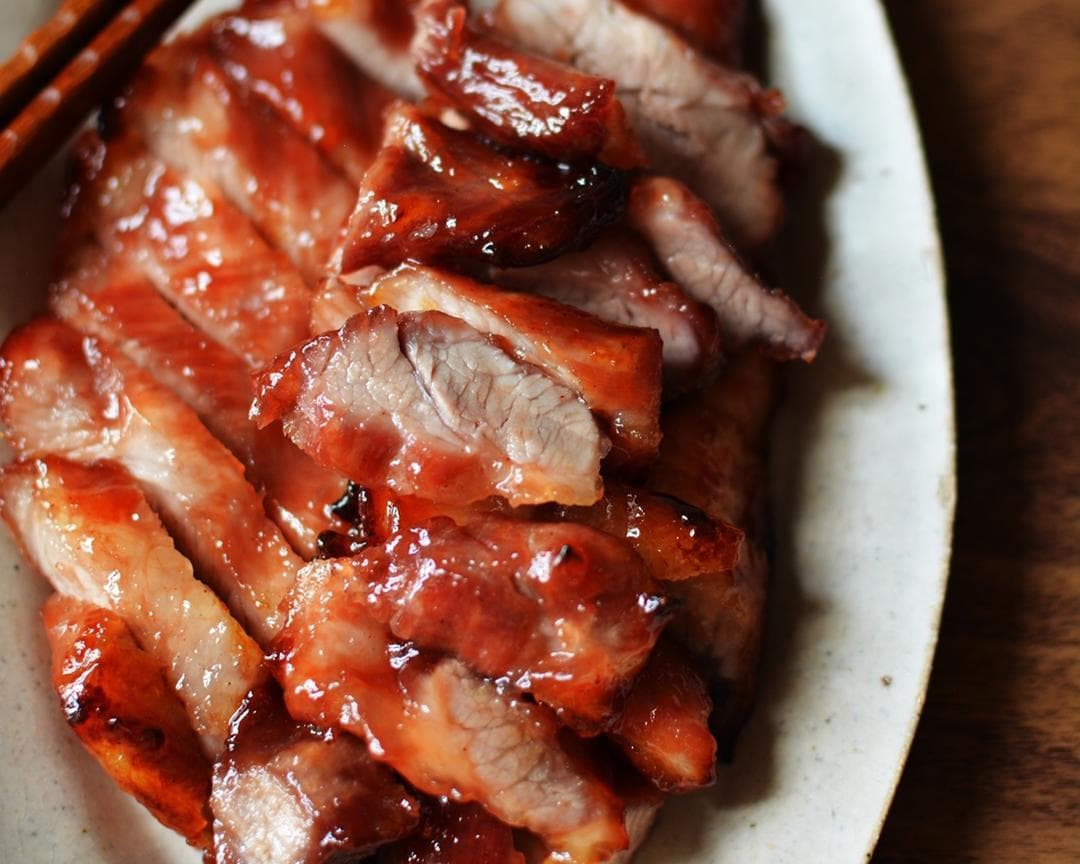
Before you start
- Allow about 3 hours 10 minutes with the two-hour marinade: roughly 20 minutes of preparation, 2 hours refrigerated marinating, about 43 minutes of roasting as a starting reference, and a 5-minute rest, rounded up. The 190-minute total is an editorial planning estimate, not a kitchen-tested timing. An overnight marinade takes longer.
- Have a kitchen scale, covered marinating container, rimmed tray, oven-safe rack, clean basting brush, tongs and a thin-tip digital food thermometer ready. Sauce weights are retained in grams rather than converted into falsely precise tablespoons.
- For North American shopping, look for char siu sauce or Chinese barbecue sauce, oyster sauce, Chinese cooking wine, and boneless pork belly. Scallions and green onions are the same shopping name here. Availability varies by store.
- Lee Kum Kee's US Char Siu Sauce page lists soybeans and wheat as allergens, and includes honey and Red 40 among the ingredients. That US product example is not proof that the Chinese-label jar pictured has an identical formula. Check the actual jar you buy.
- The source allows pork belly, marbled pork shoulder or pork neck. The photos and main ingredient list here use belly. In the US and Canada, a well-marbled pork shoulder or Boston butt is a possible alternative; lean tenderloin is not an equal-time replacement.
Let’s cook.
Check the sauce and separate clean brushing portions
Weigh 45 g char siu sauce, 15 g oyster sauce and 5 g cooking wine for the marinade. Before handling raw pork, put a little additional char siu sauce and honey into separate small dishes for the first and second brushing stages. Keep those portions covered and separate from the marinade. Use only enough to paint a thin layer at each stage; the source does not give an exact glazing quantity. Do not add extra salt, sugar or chicken seasoning in this version.
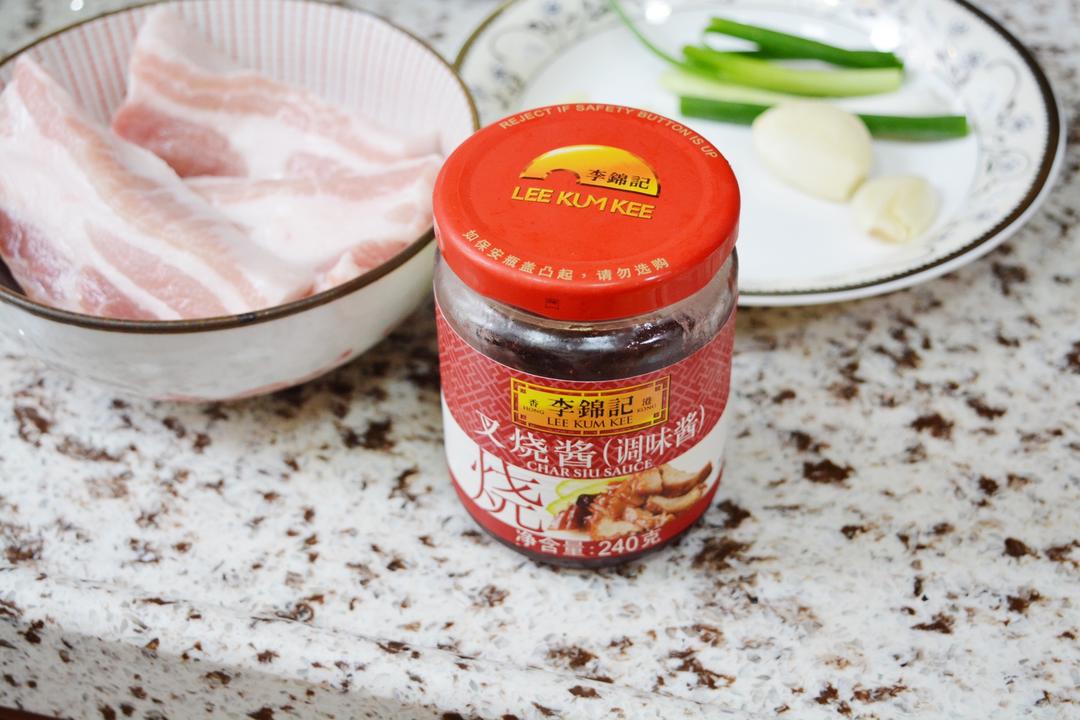
Look for thisThe photograph shows the source's Chinese-label jar. The US or Canadian package may look different, so check for Char Siu Sauce or Chinese Barbecue Sauce and read your own ingredient label.
Prepare the aromatics and even-sized pork pieces
Cut the scallion into short lengths, slice the ginger and lightly crush the garlic. Use boneless pork belly cut into pieces of similar thickness so one piece does not finish much earlier than another. The source photographs show relatively small, flat pieces, not a whole belly slab, but their exact thickness is not recorded. Keep raw-pork utensils and boards separate from food that is ready to eat, and wash hands and equipment after raw-meat contact.
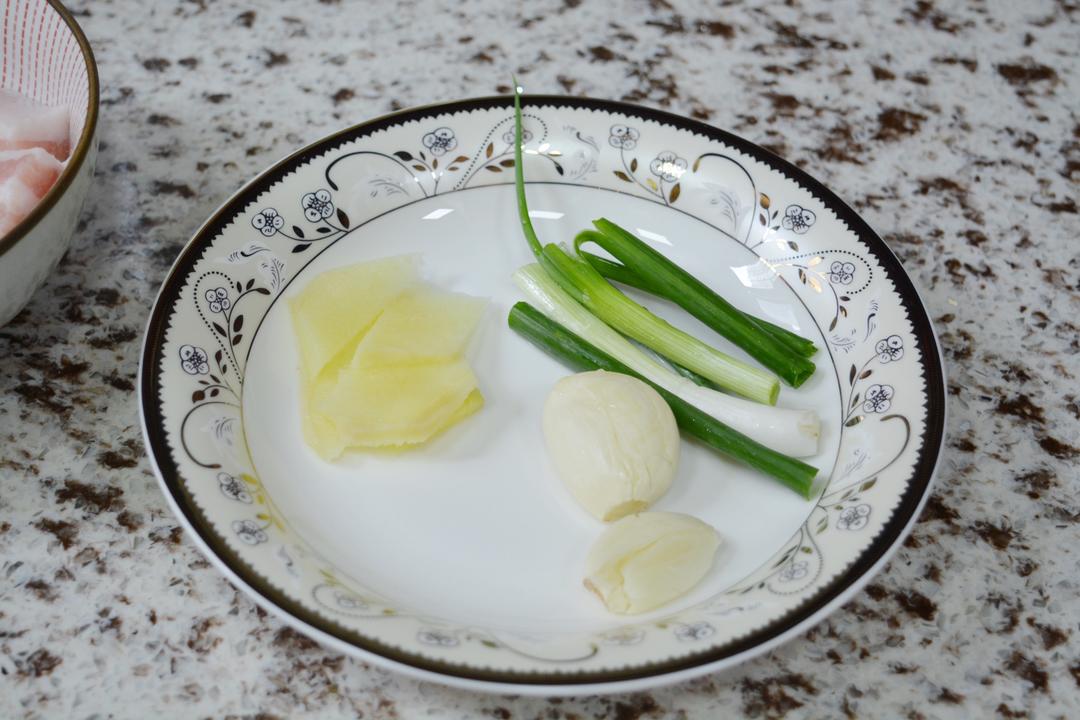
Look for thisThe scallion, ginger and garlic amounts above are practical editorial starting amounts, not weights inferred from this photograph.
Coat the pork and refrigerate for two hours
Mix the measured marinade sauces and cooking wine with the aromatics in a covered nonreactive container. Add the pork and turn it until all sides are coated. Cover and refrigerate at 4°C / 40°F or below for 2 hours. The source also suggests an overnight refrigerated marinade; if you choose that option, add the extra waiting time to your schedule. Keep the honey for brushing rather than adding it to this marinade. Do not taste the raw marinade.
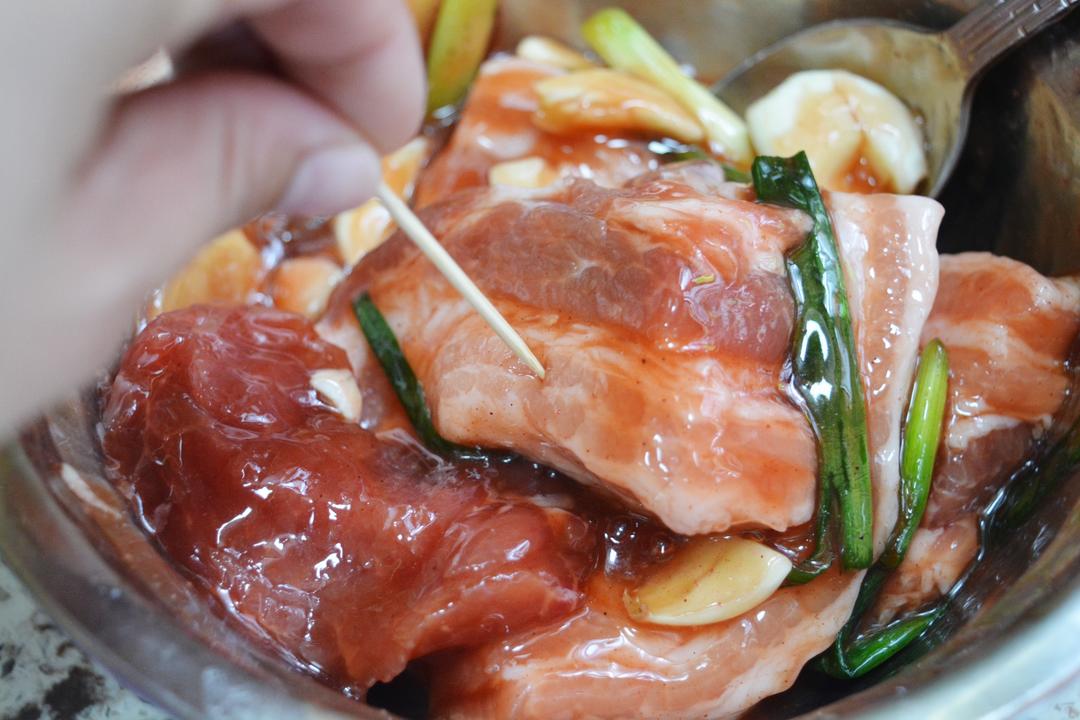
Look for thisThe source photo includes a toothpick-piercing step. Piercing is not required for this version, and the toothpick is not a food thermometer.
Roast on a rack with a thin first glaze
Near the end of marinating, preheat a conventional oven to 200°C / about 390°F. Set an oven-safe wire rack over a rimmed tray; lining the tray with foil makes catching the sugary drips easier. Lift the pork out of the marinade, remove loose aromatic pieces and arrange it with space between pieces. Discard the used raw marinade. Brush the upper surfaces lightly with the first clean portion of extra char siu sauce, then a thin layer of honey. Roast on an upper-middle shelf for about 20 minutes as a starting schedule; check earlier if your pieces are thin or the glaze is darkening quickly. Discard any first-stage glaze left after the brush has touched the pork.
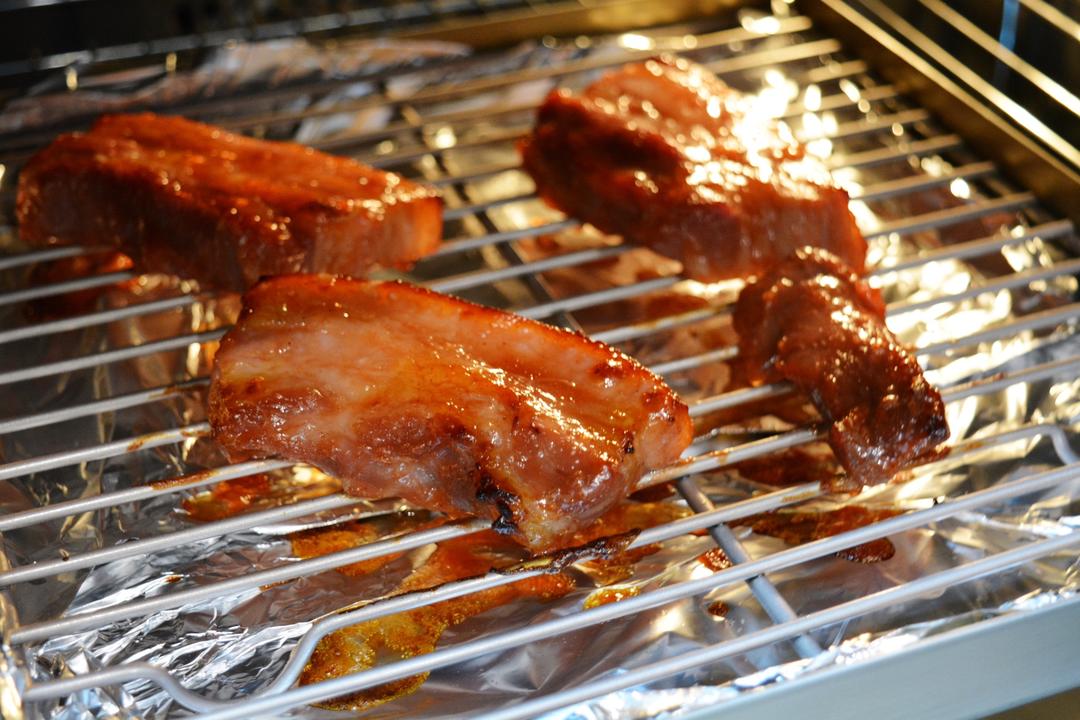
Look for thisKeep the tray away from the heating element and do not use the broiler. The rack photo shows the roasting setup, not a measured internal temperature.
Turn, brush the other side and watch the glaze
Use tongs to turn the pork. With a clean brush and the second reserved portion, coat the new upper side thinly with char siu sauce and honey. Return it to the oven, checking the center temperature during this stage rather than waiting for a fixed timer. The source used about 23 minutes after turning, including its final 3 minutes with a lower-temperature fan setting; those 3 minutes were not extra cooking time. This version does not require switching to fan mode. If the surface is browning too fast, reduce the oven to 180°C / about 355°F and continue checking the center. Do not add more glaze just to deepen a red color. Discard any raw-contact brushing leftovers.
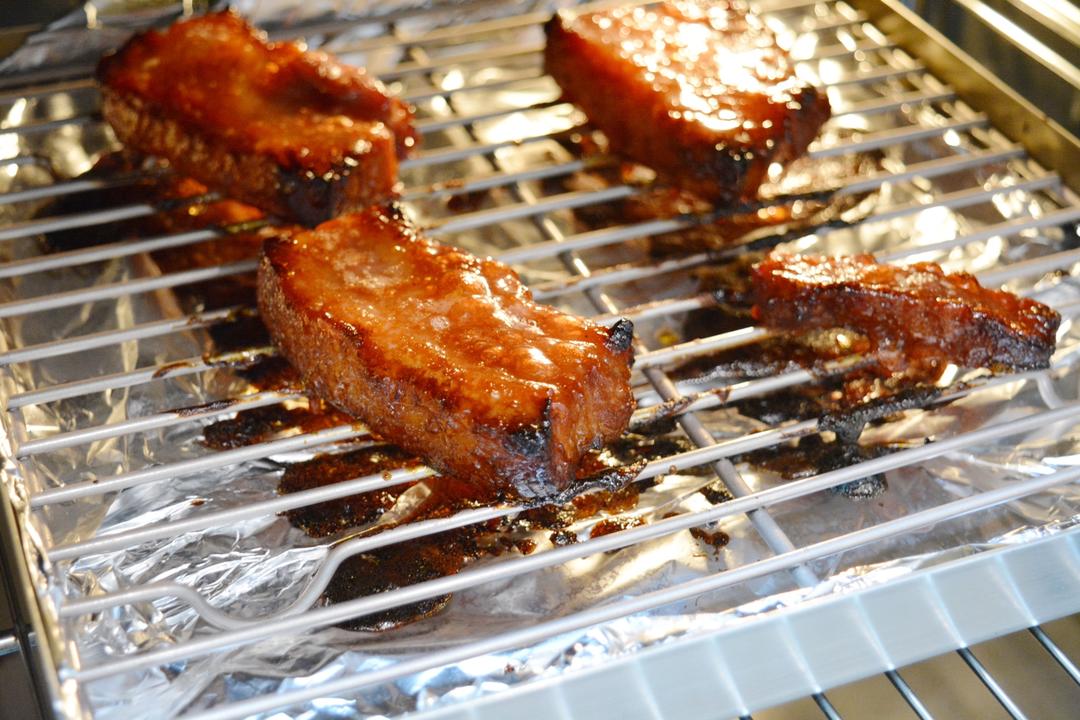
Look for thisThe source's roughly 43 minutes of total roasting is a starting reference, not a guaranteed time for every cut, thickness or oven.
Check the center of each pork piece
Insert a clean thin-tip food thermometer into the thickest center of each piece, from the side if that makes it easier to reach the middle. Avoid measuring only a surface layer or a pocket of fat. For this North American guide, follow Health Canada's pork-pieces guidance of at least 71°C / 160°F. Remove pieces that have reached that temperature to a clean plate; continue roasting any that have not. Clean the probe between checks after undercooked-meat contact, and use clean serving utensils rather than the raw-pork tools.
Look for thisRed glaze, browned edges, a photograph or 43 minutes on a timer cannot replace the center-temperature check.
Rest briefly, slice and serve
Let the cooked pork rest on the clean plate for about 5 minutes, then slice across the grain with a clean knife. Serve as two small portions with rice and vegetables if desired; the rice and vegetables are not included in these ingredient quantities. Do not serve the discarded marinade as a dipping sauce. Refrigerate leftovers in a shallow covered container within 2 hours at 4°C / 40°F or below. Reheat thoroughly once, checking the center reaches 74°C / 165°F.
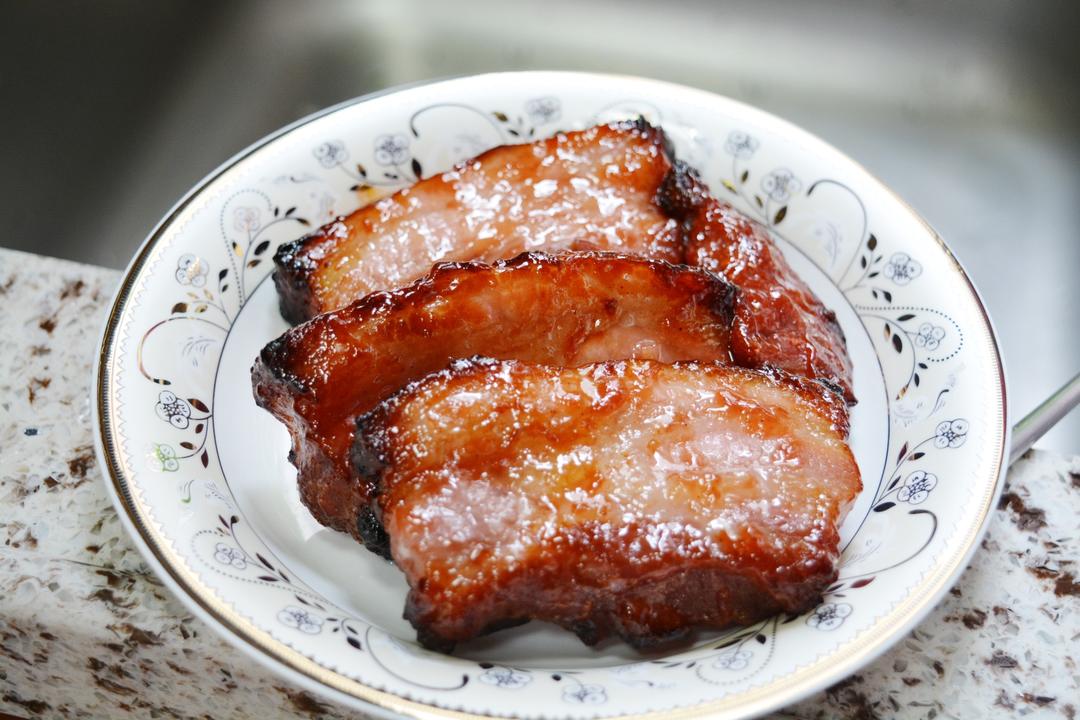
Look for thisFive minutes of resting and two small servings are editorial estimates. The photograph shows finished pork pieces before slicing, not a thermometer reading.
When it doesn’t go to plan
The glaze burns before the center is ready
Use thinner coats and keep the pork away from the heating element. Reduce the oven temperature, shield an already dark surface loosely with foil if needed, and continue until the center reaches 71°C / 160°F. Do not serve it just because the outside is dark.
The pork is dry
Start with a marbled cut, cut pieces to similar thickness and check smaller pieces early. A leaner cut or thin piece may finish before the source's timing. Remove each piece when it reaches the stated endpoint instead of keeping the whole batch in for an arbitrary extra 23 minutes.
The marinade or glaze tastes too salty
Char siu sauce and oyster sauce both supply seasoning. This adaptation omits the source's extra salt and optional chicken seasoning. Keep the marinade and brushing quantities separate, use thin coats, and check package labels when choosing sauces. Never taste a raw-pork marinade to adjust seasoning.
The pork is not as red as the photo
Different sauce formulas and lighting give different colors. Some prepared sauces include coloring. Do not add more sauce, dye or extra cooking time merely to imitate the picture; redness is neither a flavor measurement nor a safety check.
Small details, better cooking.
- This is a prepared-sauce method. It does not claim a from-scratch marinade, no added coloring, or an exact restaurant-copycat result. The source's personal taste comments are not presented as our own cooking experience.
- The measured 45 g char siu sauce belongs entirely to the marinade. Use separate additional sauce for glazing instead of quietly taking it out of that amount; keep clean portions apart from raw-contact utensils.
- Do not keep roasting only to match the color in a photograph. Sauce ingredients, oven heat and lighting all affect the appearance; use the thermometer endpoint and watch sugary edges carefully.
- Doubling the recipe changes the shopping amounts, not the safe cooking time for each piece. Leave space on the rack, use additional batches if needed and check every piece separately.
Working with what you have
Pork belly
Well-marbled boneless pork shoulder (Boston butt)
The source allows a marbled shoulder or neck cut. Shoulder is a different shape and fat distribution from the photographed belly; cut into similarly thick pieces and use center temperature, not identical roasting minutes.
A specific brand of char siu sauce
Another prepared char siu or Chinese barbecue sauce
Read the label and use the amount for a comparable prepared sauce only. Sweetness, salt, color and allergens vary. Hoisin sauce, dark soy sauce and Japanese teriyaki sauce are not established one-for-one substitutes in this recipe.
Chinese cooking wine
Omit the 5 g wine if avoiding alcohol
This editorial option loses some aroma and is not a tested reformulation. Check the other packaged sauces too if strict alcohol avoidance matters; cooking is not a promise of complete alcohol removal.
The source's extra salt, optional chicken seasoning and optional sugar
Omitted in this adaptation
The prepared sauces and honey already provide salt and sweetness. This omission is an editorial choice, not a claim that every brand has the same flavor balance.
Need a unit conversion? Open kitchen tools. For ingredients, visit the pantry.
Questions from the kitchen
What is char siu?
Char siu is Cantonese-style Chinese barbecue pork. This version uses a home oven, pork belly, prepared char siu sauce and a honey glaze; it is not Japanese braised chashu.
Which pork cut should I buy for char siu in the US or Canada?
The pictured version uses boneless pork belly. A well-marbled pork shoulder, often sold as Boston butt, is an alternative consistent with the source's cut options. It will not necessarily cook in the same time; use similarly thick pieces and check each center.
Is char siu sauce the same as hoisin or soy sauce?
No. Buy a jar labelled char siu sauce or Chinese barbecue sauce for this prepared-sauce recipe. Plain hoisin or soy sauce is not a verified one-for-one replacement for the measured char siu sauce.
How long should char siu marinate?
This recipe uses 2 hours in the refrigerator at 4°C / 40°F or below. The source also suggests overnight refrigeration. The displayed 190-minute estimate includes the two-hour option, not an overnight wait.
What oven temperature and cooking time should I use?
Start with a conventional oven at 200°C / about 390°F. The source used about 20 minutes before turning and about 23 minutes afterward, with its final 3 minutes included in that second stage. Treat those times as a starting reference only; cut thickness, starting temperature and ovens differ. Check early and cook each piece to at least 71°C / 160°F in its thickest center.
Can I use the leftover marinade as a glaze or dipping sauce?
Not in this version. Discard the marinade that touched raw pork. Set aside separate clean sauce and honey before handling the meat, and discard brushing leftovers once their brush has contacted raw or undercooked pork. Do not put them back in the original jar.
Is this char siu recipe gluten-free?
Do not assume so. The Lee Kum Kee US char siu sauce example lists wheat and soybeans, and oyster sauce or cooking wine may have additional ingredients. Check every package; this recipe has not been reformulated or tested as gluten-free.
Why does char siu look red?
The color depends partly on the sauce. For example, Lee Kum Kee's US Char Siu Sauce ingredient list includes Red 40; other products can differ. This recipe is not advertised as dye-free, and red color does not tell you whether the pork is safely cooked.
Prefer to send a private correction?
FROM YOUR KITCHEN
Made it? Make it yours.
Share your plate, tell us what you changed, or ask a cooking question. Your experience can help the next home cook.
Kitchen notes 0
The table is ready for your first plate.
No public notes yet. A home-cooked result does not have to look perfect to be worth sharing.
Next on the table
 01
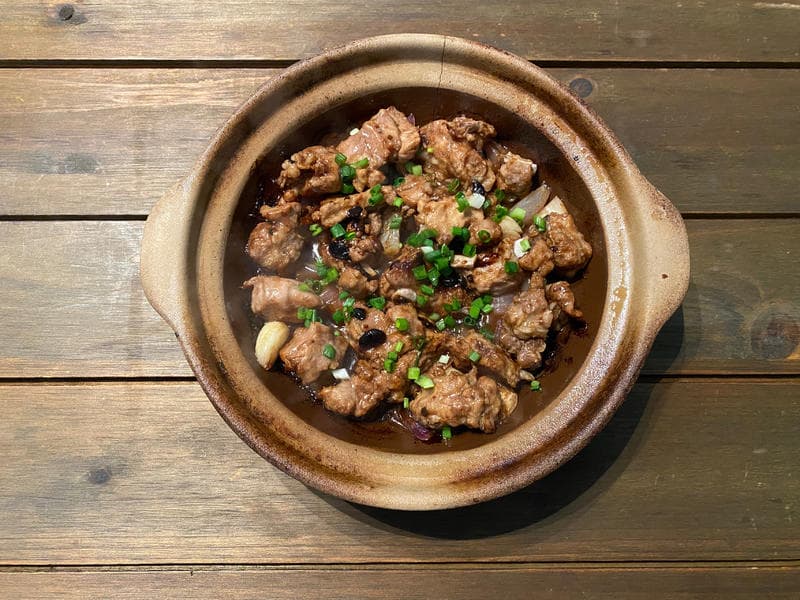
01Cantonese Sizzling Pork Ribs (Jue Jue Bao)
Cantonese sizzling pork ribs, or jue jue bao, cook over onion, ginger and garlic in a covered pot. A black bean marinade gives these Guangdong-style ribs their savory depth; moderate heat keeps the onion base from burning.
 02
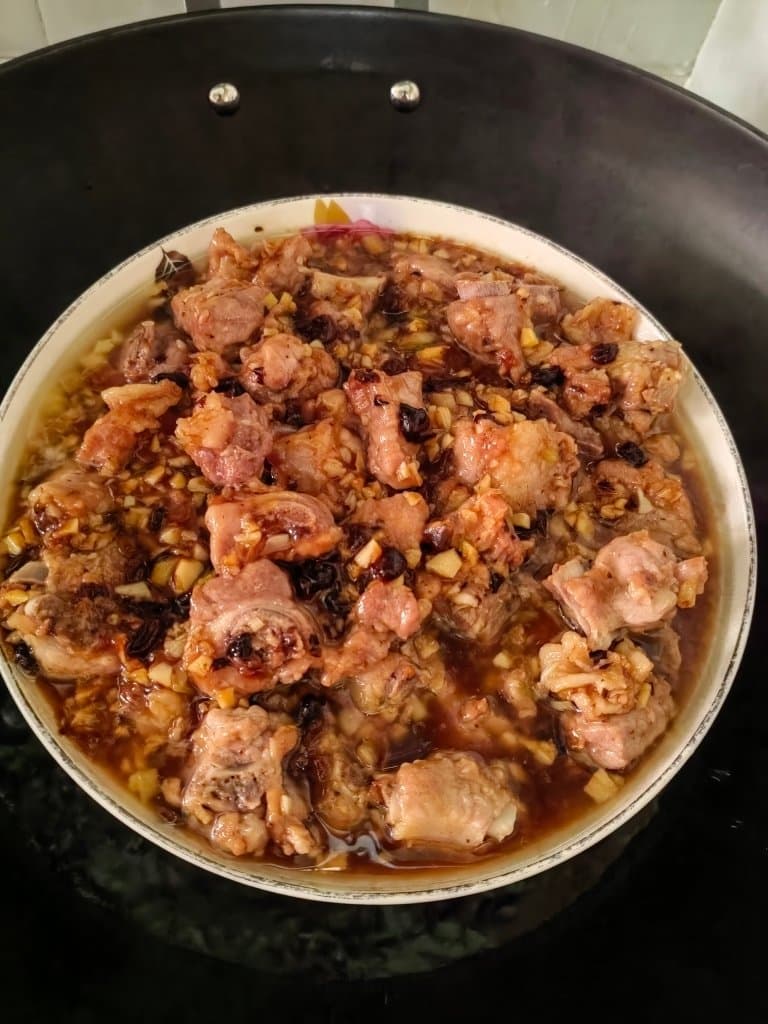
02Steamed Pork Ribs with Black Beans
Small pork-rib pieces steamed with fermented black beans and garlic. Follow the illustrated preparation, single-layer steaming and doneness checks for a savory Cantonese dish to serve with rice.
 03
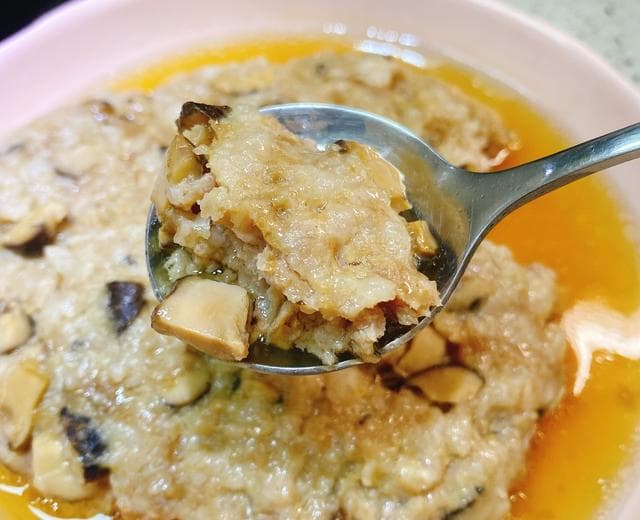
03Cantonese Steamed Pork Patty with Shiitake Mushrooms
Cantonese steamed pork patty is a juicy layer of minced pork cooked on a shallow plate, with dried shiitake mushrooms and a little ginger-scallion water. The soft meat and savory juices are made for spooning over a bowl of rice.