CANTONESE HOME COOKING
Garlic Choy Sum
蒜蓉菜心
A small pan of leafy choy sum with garlic, ginger and a splash of stock. This short-braise adaptation focuses on the different needs of stems and leaves; not yet kitchen-tested.
By Canto Hearth Editorial · Source-informed recipe. Not yet kitchen-tested by us.
Jump to ingredients & steps ↓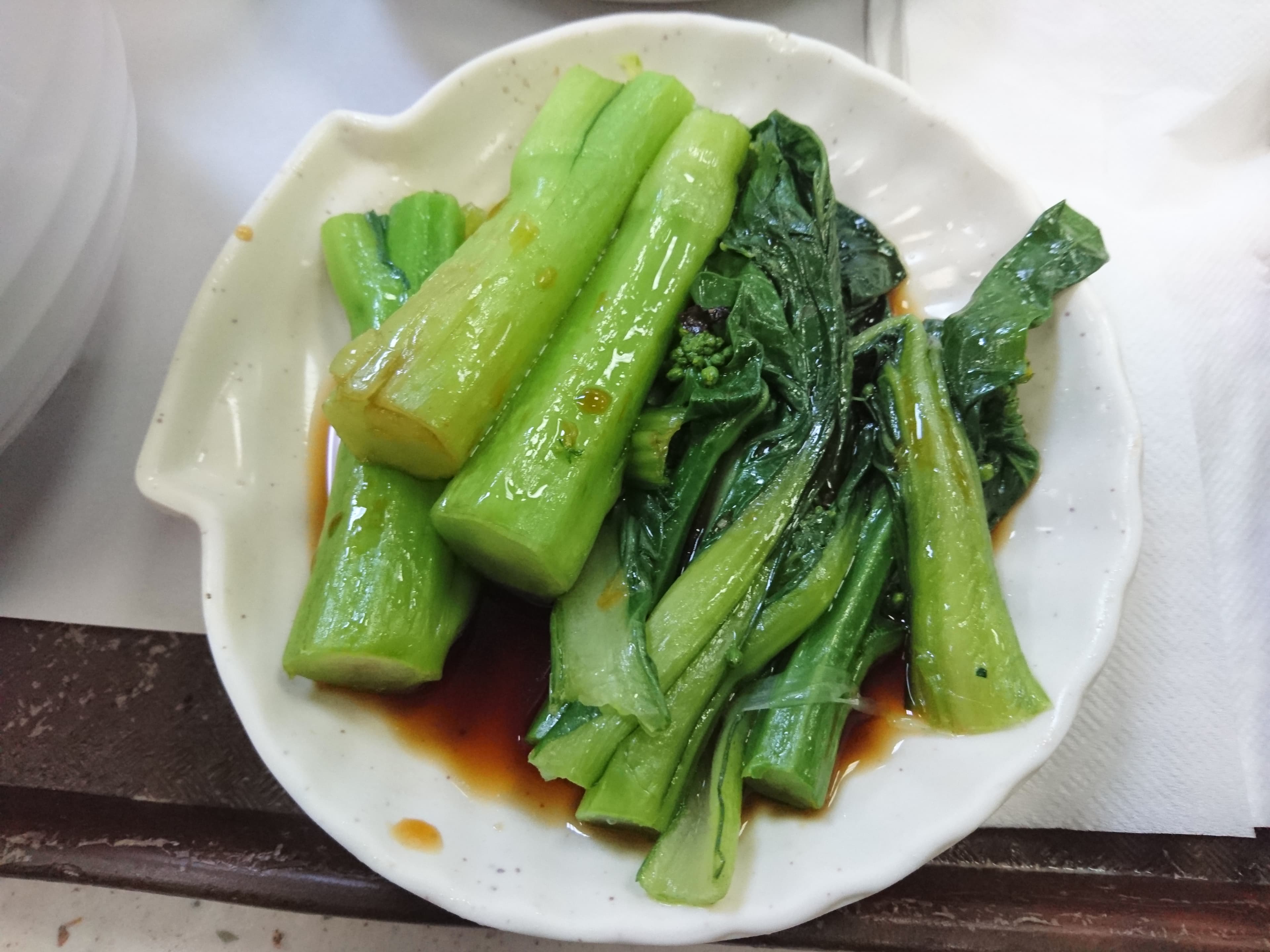

Let’s cook.
Sort stems and leaves
Wash away grit, particularly where the stems join. Drain well. Remove tough bases and separate thicker stem sections from the leafy tops. Split unusually thick stems lengthwise so they cook more evenly.
Start the aromatics
Set a wide pan with a lid over medium heat. Add oil, ginger and garlic, stirring until fragrant. Keep the garlic pale; dark-brown garlic can taste bitter and is a reason to lower the heat.
Give the stems a head start
Add the thicker stems first and toss in the aromatic oil, then add the leaves. Stir until the leaves start to collapse. The reference stir-fries choy sum for about two minutes before adding liquid; use the vegetable's size and state to guide you.
Finish with a short covered cook
Add the stock, cover and cook briefly, checking before the source's three-minute covered stage is up. Thin young stems may need less time. The finished stems should be easy to bite through while retaining some texture, with fully wilted leaves.
Season and plate
Remove the lid carefully and taste the liquid. Add the optional salt only if needed. Serve the greens with a little cooking liquor rather than boiling away every drop and overcooking the leaves.
Small details, better cooking.
- Equipment: wide pan with a lid, knife, chopping board and colander.
- Choy sum may be labelled Chinese flowering cabbage or choi sum. Look at the leaves and stems rather than assuming every bag of Asian greens cooks identically.
- For a dry stir-fry, the liquid and timing need a separate test. This draft deliberately uses a splash of stock and a brief covered stage.
- Vegetables soften while held warm. Serve soon; refrigerate leftovers within two hours at 4°C or below and reheat thoroughly once.
Working with what you have
Choy sum
Baby bok choy
Split bulky bases and separate stems from leaves. It releases water differently and is not the same vegetable.
Choy sum
Tender gai lan
The thicker stems and more assertive flavour require their own timing; peel or split tough stems.
Chicken stock
Unsalted vegetable stock or water
Vegetable stock changes the flavour; water produces a lighter result. Check the stock's label for allergens and vegetarian suitability.
Need a unit conversion? Open kitchen tools. For ingredients, visit the pantry.
Questions from the kitchen
Is choy sum the same as bok choy?
No. Both are used as Chinese greens, but their stem shape, water content and cooking behaviour differ. Bok choy is a workable variation when its thick bases are cut appropriately.
Why are the leaves soft but the stems tough?
The stems may be older or too thick for the chosen timing. Trim tough ends, split thick stems and give them a head start instead of cooking the leaves for much longer.
Do I need oyster sauce?
Not for this version. Garlic, ginger and a little stock provide the base. Adding oyster sauce would change seasoning and introduce mollusc allergens unless an appropriate alternative is used.
Sources & editorial notes
Independently written in English using the references below. Timing and ingredient adjustments still need home-kitchen validation. No source photographs or text are reproduced without permission.
- 蒜茸炒菜心 — DayDayCook. Accessed 2026-09-26.
- 食物安全五要點備忘錄 — 香港食物安全中心. Accessed 2026-09-26.
Next on the table
 01
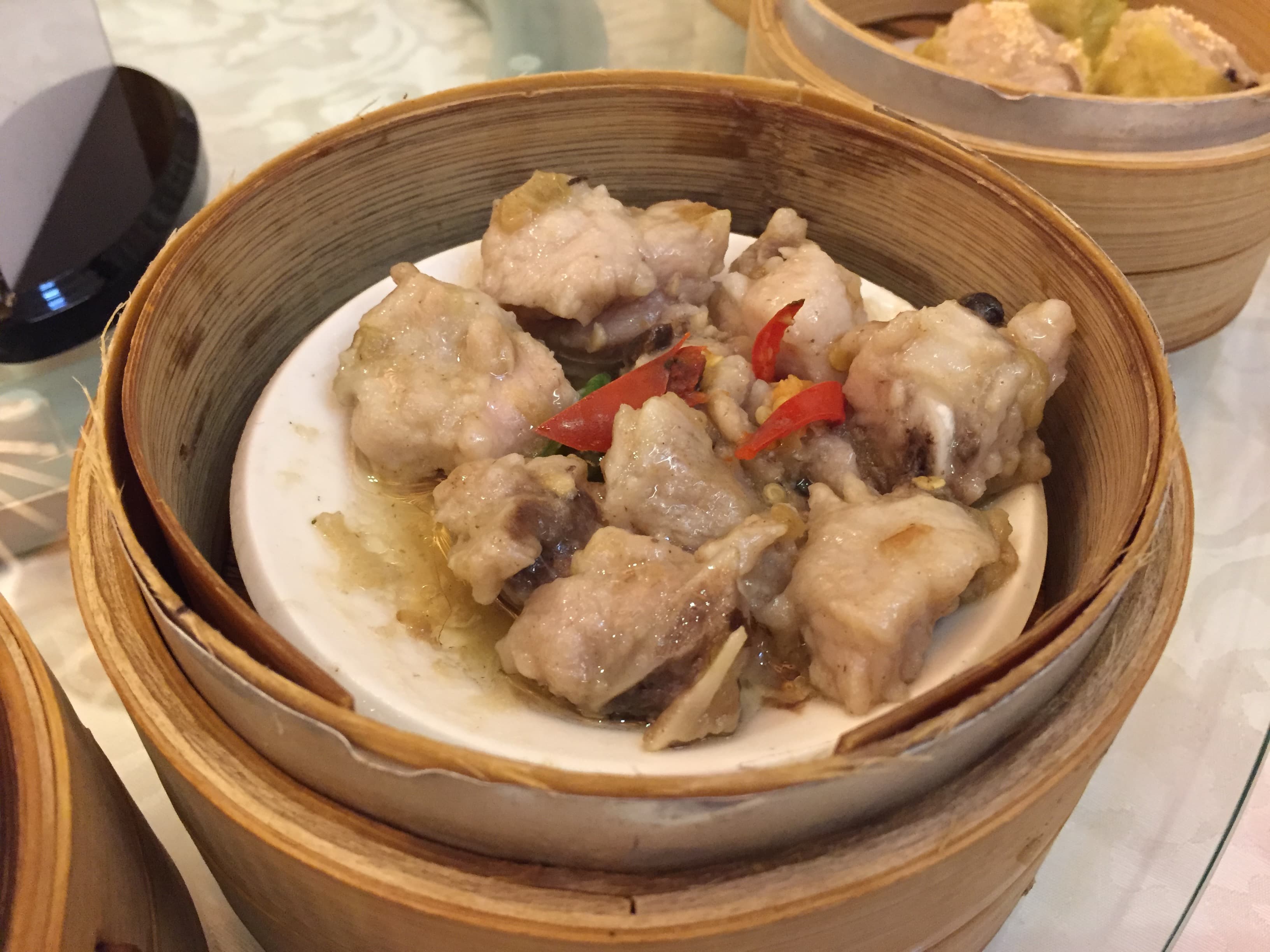
01Steamed Pork Ribs with Black Beans
Small pork-rib pieces steamed with fermented black beans and garlic. Learn which beans to buy, how to arrange the dish and how to check doneness. Not yet kitchen-tested.
 02
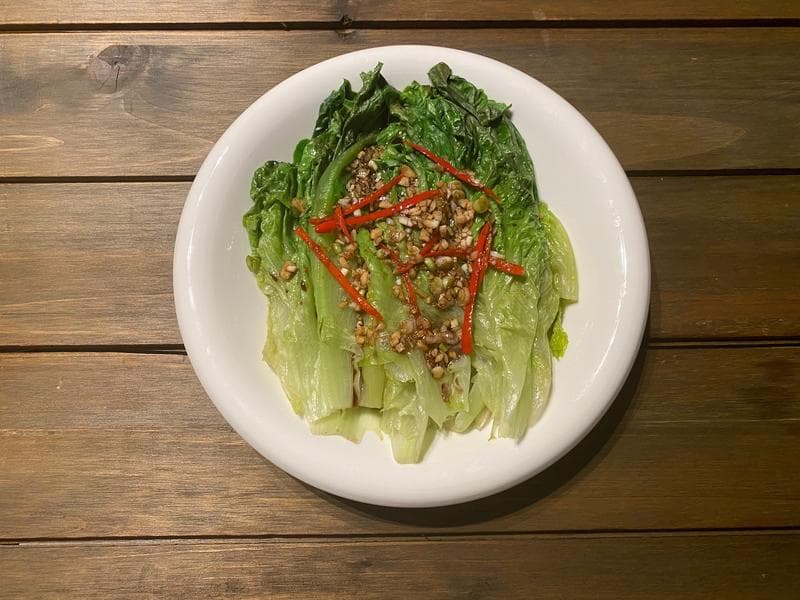
02Cantonese Blanched Lettuce with Garlic Soy Dressing
Cantonese blanched lettuce, or bai zhuo sheng cai, pairs just-wilted leaves with a fragrant garlic and soy dressing. A small amount of black vinegar gives this quick Guangdong vegetable side a rounded flavor without a heavy sauce.
 03
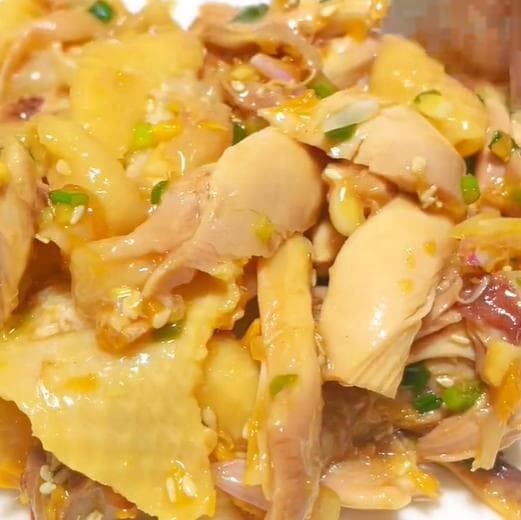
03Cantonese Ginger Scallion Chicken
Cantonese ginger scallion chicken combines tender poached chicken with a warm ginger, shallot and scallion dressing. This shredded version of jiang cong lao ji is easy to serve over rice, with the aromatic sauce tossed through just before eating.