CANTONESE HOME COOKING
Chinese Corn, Carrot and Pork Rib Soup
玉米胡萝卜排骨汤
A gently simmered pork rib soup with sweet corn, carrots, ginger and optional red dates. The illustrated guide explains which ribs to buy, why to blanch them, and when to add the vegetables. This home-style soup fits a Cantonese meal without needing a clay pot.
By Canto Hearth Editorial · Source-informed recipe. Not yet kitchen-tested by us.
Jump to ingredients & steps ↓6 step-by-step photos · Tap any photo for a closer look.
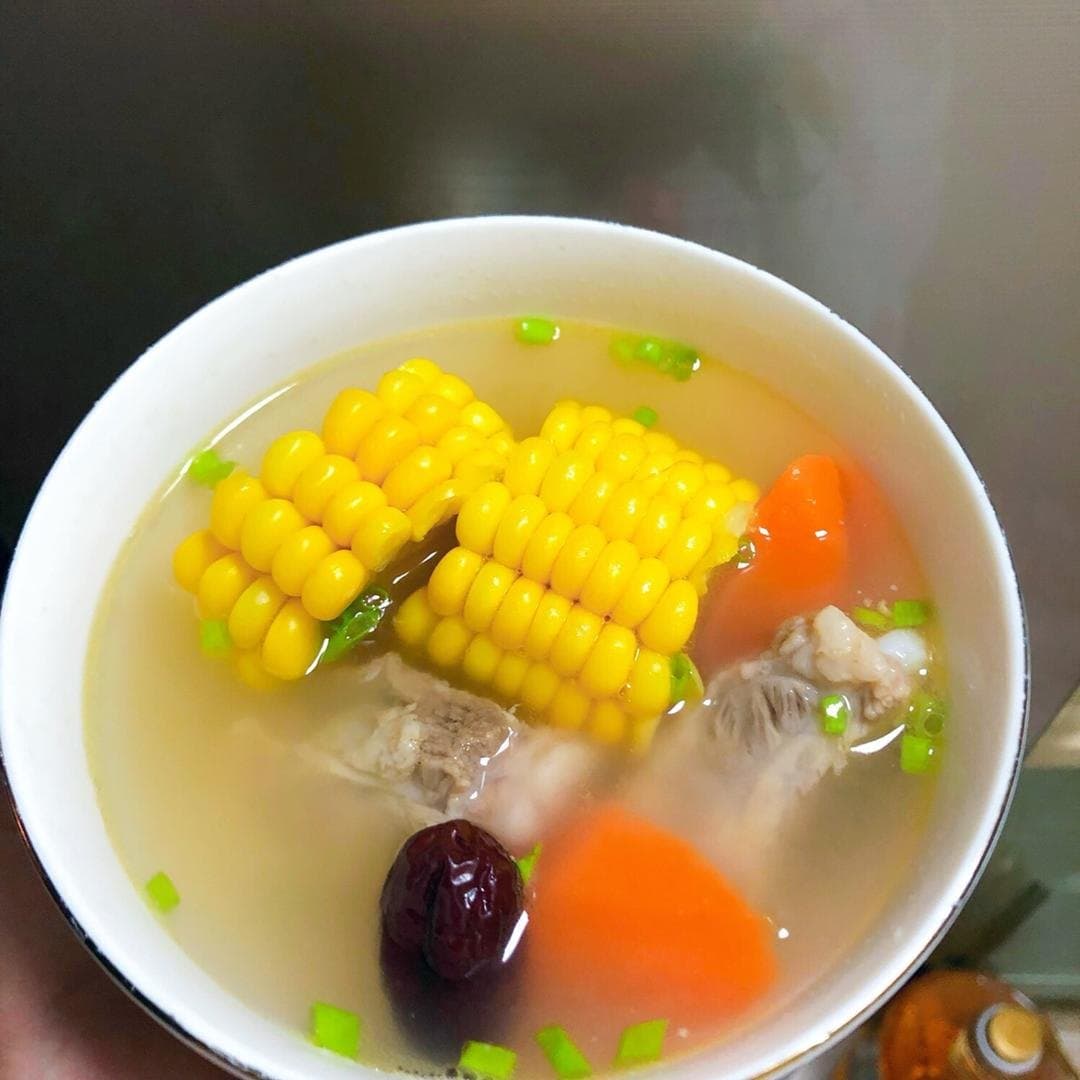
Before you start
- Use a 3–4 litre / 3–4 quart lidded saucepan or Dutch oven. A clay pot is optional; follow its manufacturer’s heating instructions if using one.
- Ask for bone-in pork spare-rib pieces suitable for soup. Keep raw pork and its board away from prepared vegetables. There is no need for the source recipe’s one-hour raw-meat soak.
- Cut the corn and carrots before handling raw pork, or wash the board and knife thoroughly between jobs. Remove jujube pits before they go into the pot.
Let’s cook.
Blanch the ribs and skim
Put the ribs in a saucepan and add enough cold water to cover them. Add a few ginger slices, one scallion white and half the optional wine. Bring to a boil and skim off the foam. Once foam has risen, lift the ribs out with tongs. Discard this blanching liquid. This step cleans up the broth’s appearance; it is not the final cooking stage.
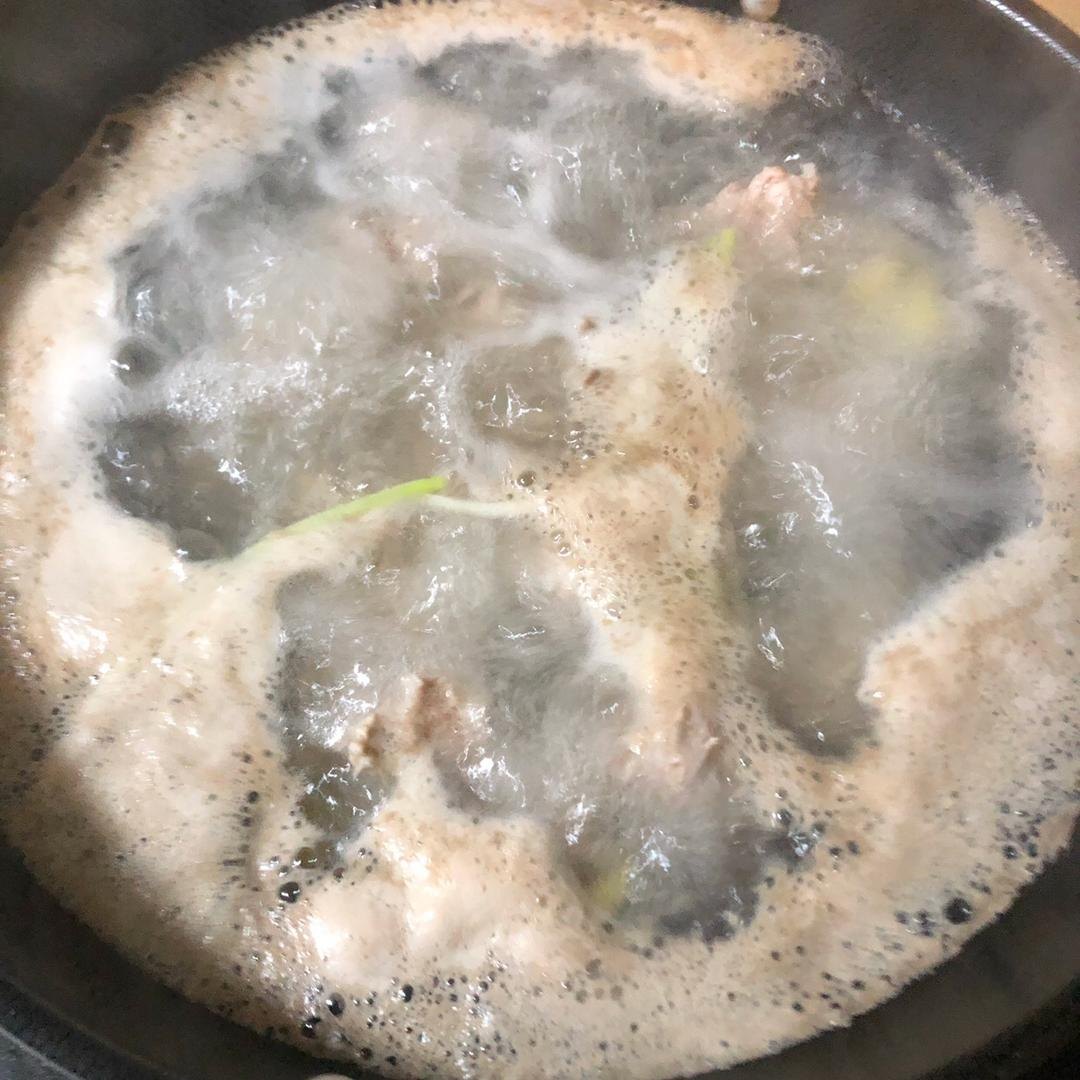
Look for thisPale foam gathering on the surface is the cue to skim. Do not judge the pork’s safety by its pale exterior.
Drain and prepare the pot
Drain the blanched ribs well. Remove any clinging foam with a spoon or damp kitchen paper. Clean the soup pot before using it for the next stage. Wash utensils that touched raw pork before reusing them.
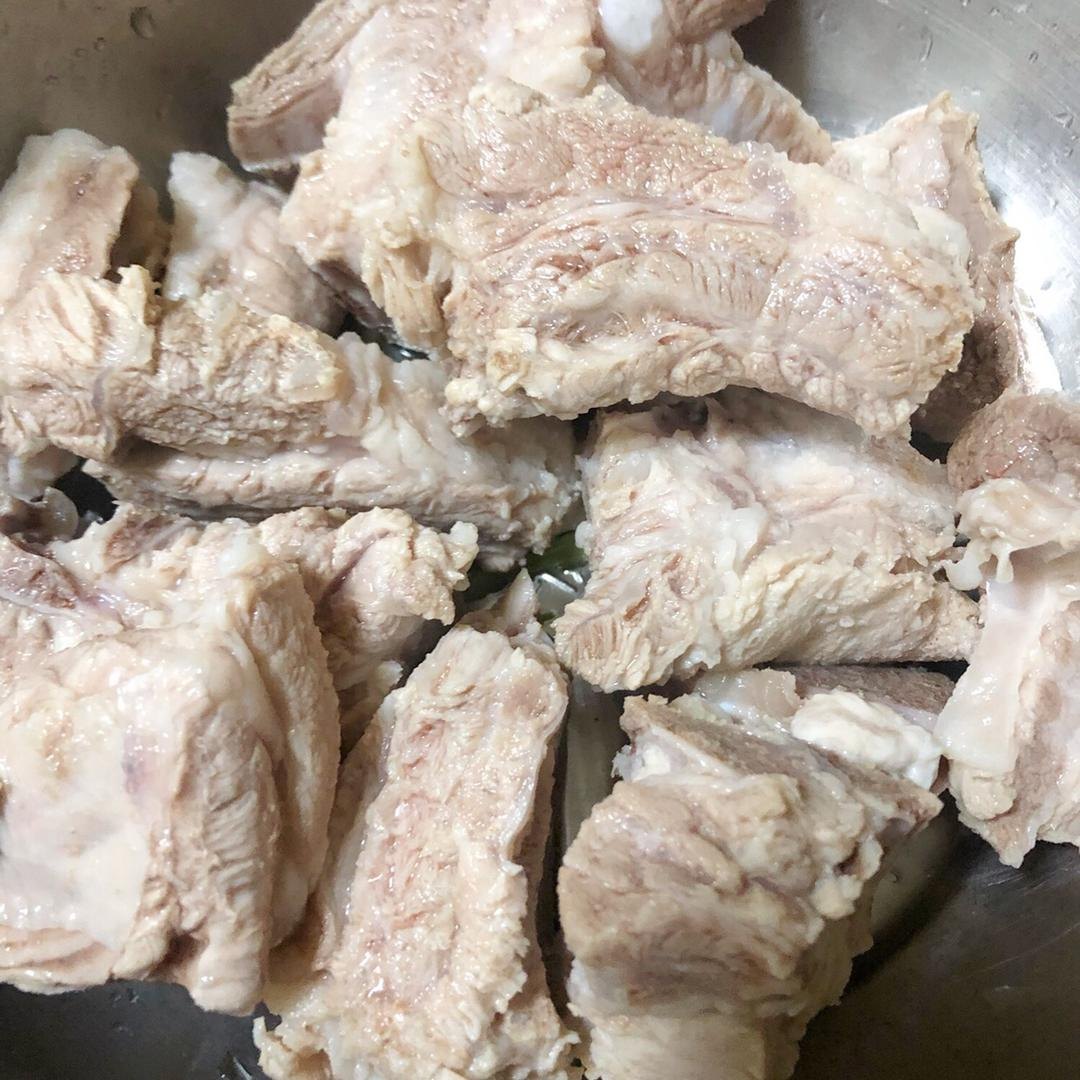
Look for thisThe ribs should not carry a pool of blanching water into the next pan.
Briefly sauté with ginger
Heat the oil over medium heat. Add some ginger and the remaining scallion white; stir briefly until fragrant without burning. Add the drained ribs and turn for 1–2 minutes. Add the remaining optional wine, then transfer the ribs to the clean soup pot. Discard the sautéed aromatics.
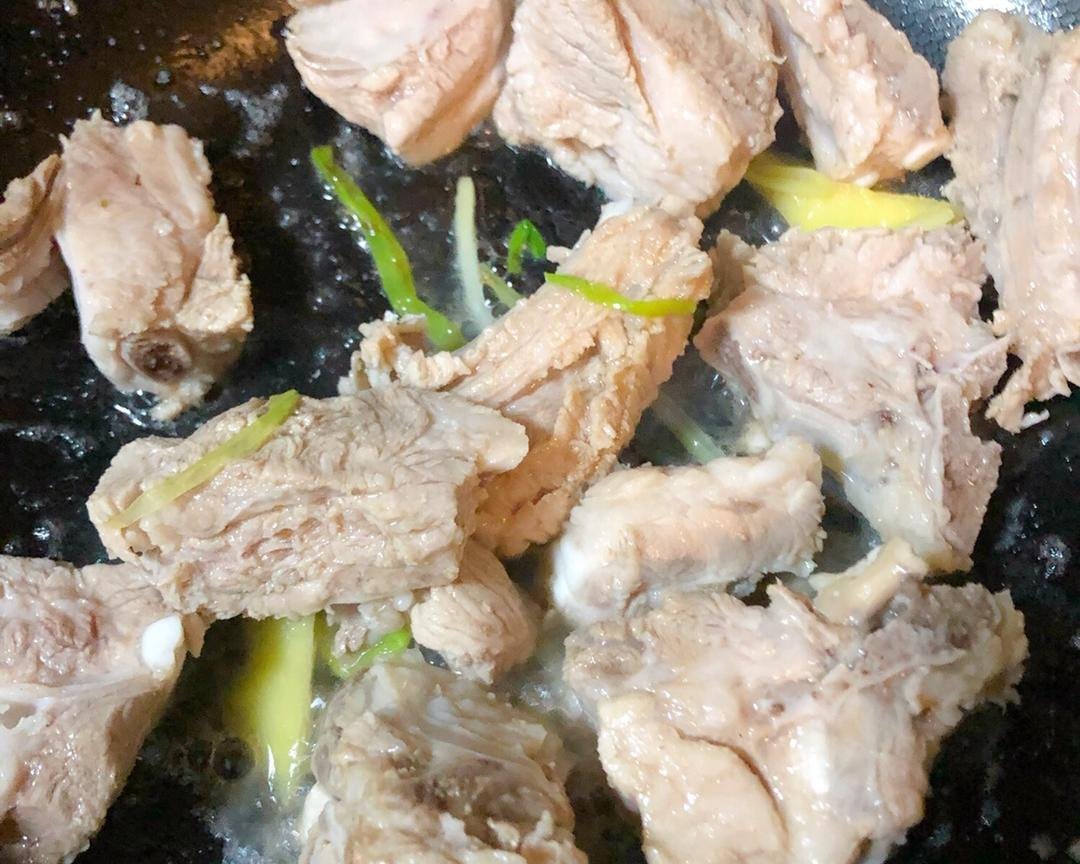
Look for thisThis is a brief aromatic step, not a dark sear. Lower the heat if the ginger starts browning quickly.
Start the broth; prepare the vegetables
Add the measured hot water and remaining fresh ginger slices to the ribs. Bring to a boil, then reduce to a gentle simmer. Cover partly and simmer for about 30 minutes. Meanwhile, have the corn rounds, carrot chunks and optional pitted red dates ready.
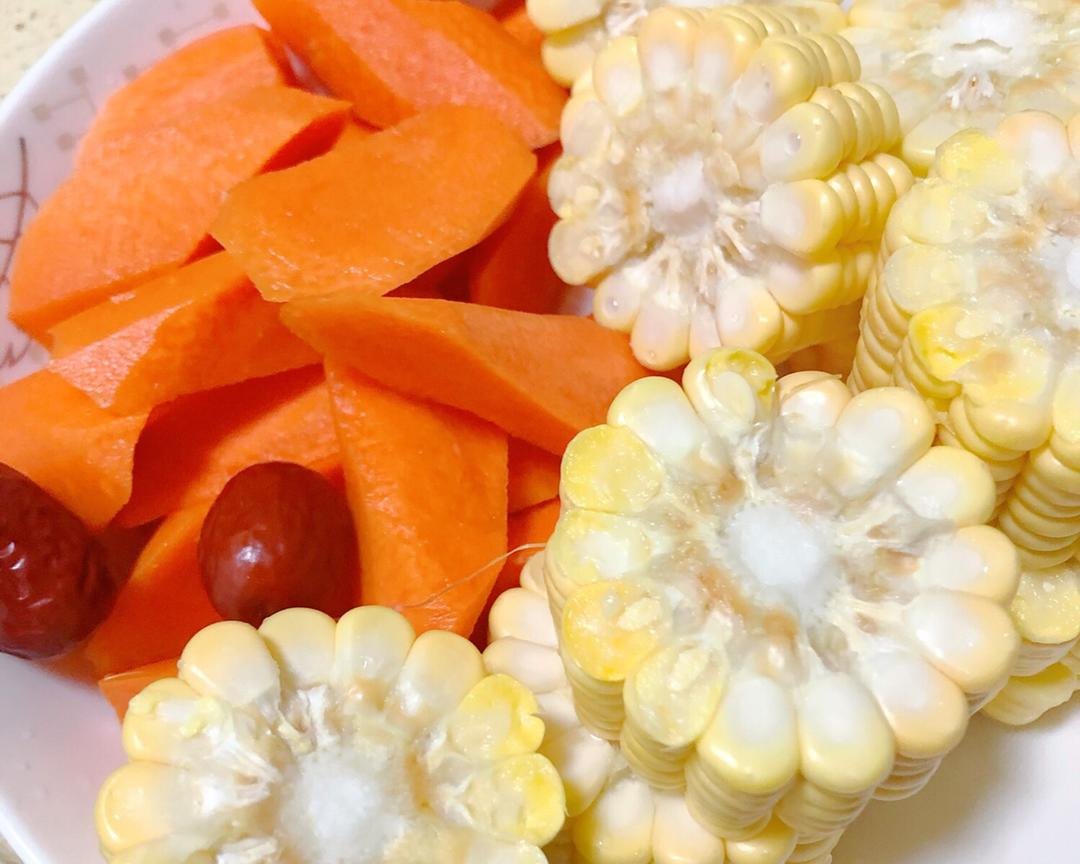
Look for thisUse a gentle, steady simmer. The vegetables wait until the ribs have had a head start.
Add corn and carrots
Add the corn, carrots and optional red dates. Return to a simmer and cook for about 20–30 minutes, until the carrots are tender and the rib meat yields when pierced. Add a little hot water if the liquid falls below the solids. Timing depends on the size and meatiness of the ribs.
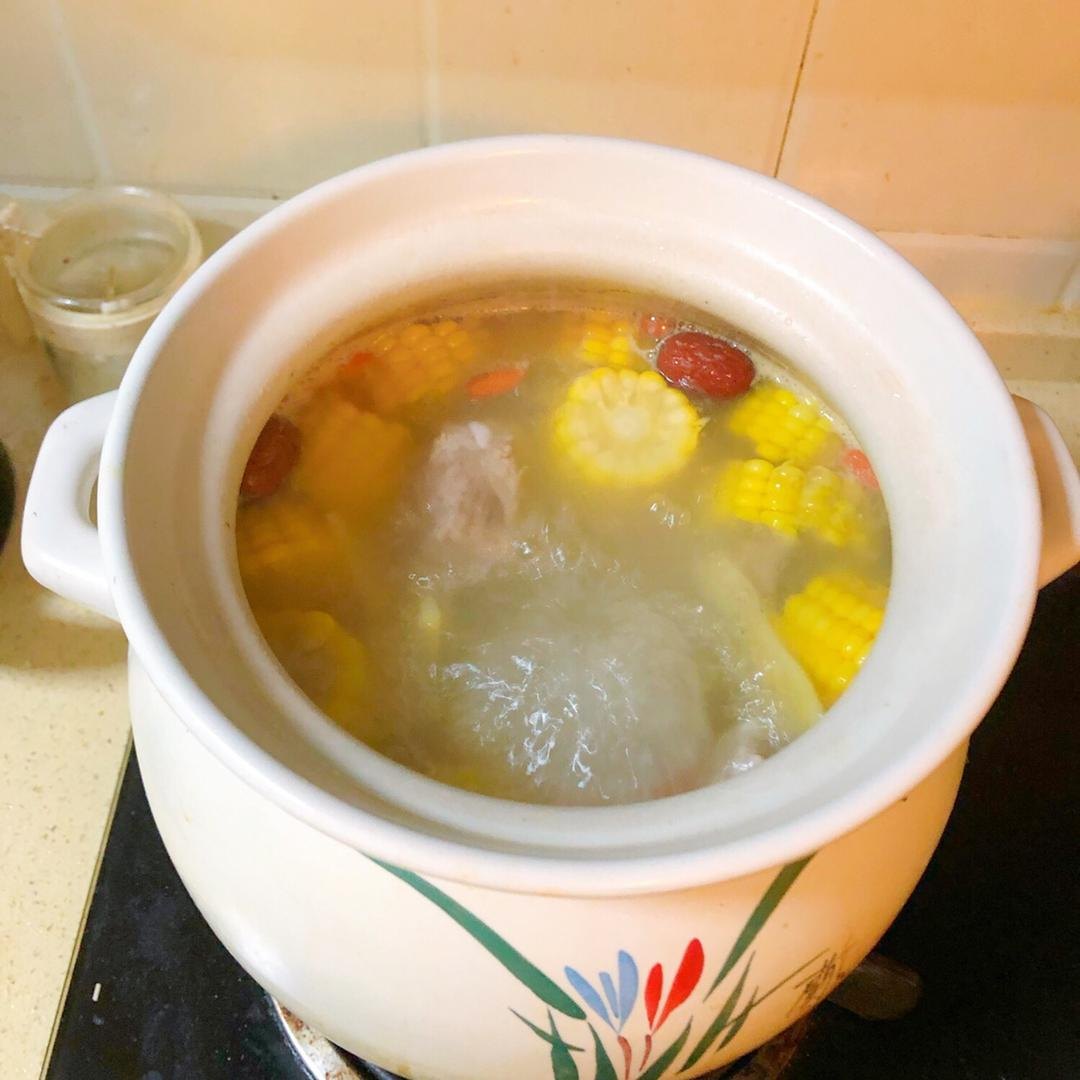
Look for thisA fork should enter a carrot chunk easily; the rib meat should soften rather than remain springy.
Finish, check and season
Add the optional goji berries for the final 5 minutes. Use a clean thermometer in the thickest rib meat, avoiding bone: check at least 75°C / 167°F. Simmer longer if needed for either doneness or tenderness. Skim excess surface fat if desired, then add the salt to taste. Scatter over scallion greens and serve in bowls, warning diners about bones and corn cobs.
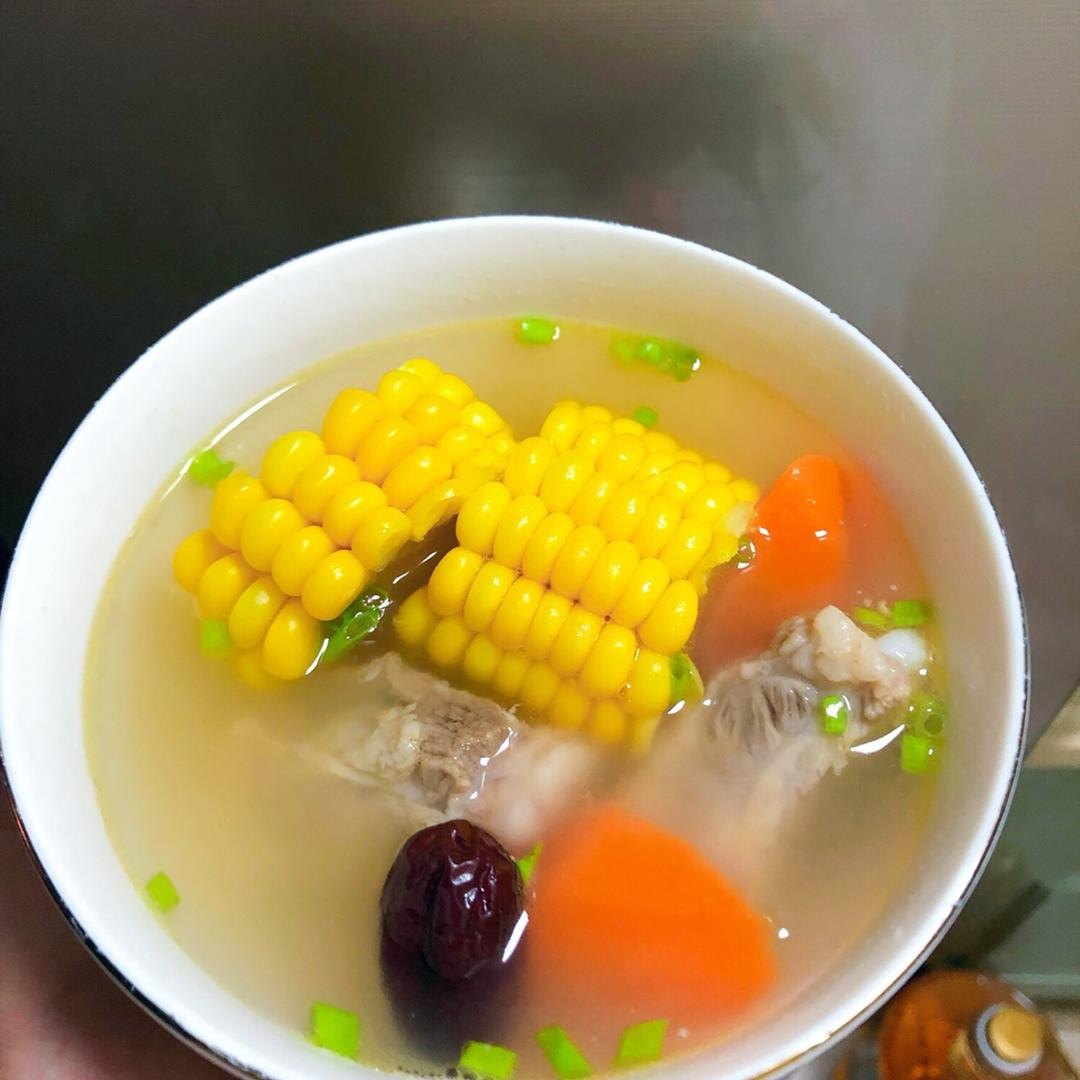
Look for thisThermometer doneness and tenderness are separate checks. A minimum safe temperature does not guarantee soft ribs.
When it doesn’t go to plan
The broth is greasy or cloudy
Skim the blanching foam, discard that first water and keep the final pot at a gentle simmer. Some cloudiness is normal and is not itself a safety problem. Skim excess fat rather than trying to boil it away.
The ribs are still chewy when the carrots are soft
Take out the cooked vegetables with a clean slotted spoon, continue simmering the ribs and return the vegetables at the end. Larger, meatier ribs can need longer than the estimated schedule.
The soup tastes thin
Check whether too much water was added. Simmer uncovered briefly to concentrate it, then season; do not boil hard until the vegetables disintegrate.
Small details, better cooking.
- Red dates and goji berries give this version a lightly fruity note; both are optional. No medicinal, weight-loss or special health benefit is claimed.
- Do not add a stock cube automatically. The corn and pork should be easy to taste; if using a salted stock product, omit the initial salt and check its allergen label.
- A larger batch needs a larger pot, enough water to cover the solids and fresh tenderness checks. Do not multiply simmering time by the portion multiplier.
- Divide leftovers into shallow containers and refrigerate within two hours at 4°C / 40°F or below. Reheat only once until thoroughly hot; do not cool a large full pot on the counter.
Working with what you have
Fresh corn on the cob
Frozen corn-on-the-cob pieces
Add in the vegetable stage and cook through. Loose kernels will make a different texture and do not include the cob’s flavor.
Dried Chinese red dates and goji berries
Omit either or both
You still have a corn-carrot-rib soup. Ordinary dates are much sweeter and are not a direct replacement.
Shaoxing wine
The same volume of water
This leaves out the wine aroma. Wine is optional, and cooking does not justify claiming that all alcohol disappears.
Clay soup pot
A lidded saucepan or Dutch oven
Use the same gentle simmer; evaporation can differ, so watch the water level.
Need a unit conversion? Open kitchen tools. For ingredients, visit the pantry.
Questions from the kitchen
What pork ribs should I buy for Chinese soup?
Buy meaty bone-in spare ribs and ask the butcher to cut across the bones into short pieces. A whole rack is awkward to serve and does not follow the same timing.
Do I need to soak the raw ribs for an hour?
No. This adaptation uses a cold-water blanch followed by fresh simmering water. Avoid washing raw pork under a running tap, which can spread splashes around the sink.
Can I make corn and pork rib soup without red dates?
Yes. Red dates and goji berries are optional here. Corn, carrot, pork and ginger provide the core flavor.
Can I use an Instant Pot or slow cooker?
This is a stovetop recipe. A sealed pressure cooker and a slow cooker need their own tested water amounts and cooking schedule; do not reuse the stovetop timing unchanged.
Prefer to send a private correction?
Sources & editorial notes
Independently written in English using the references below. Timing and ingredient adjustments still need home-kitchen validation. No source photographs or text are reproduced without permission.
- 滋补养生 —— 玉米胡萝卜清炖排骨汤🌽 — Ane_思远哥哥. Accessed 2026-09-27.
- Five Keys to Food Safety: practical reminders — Hong Kong Centre for Food Safety. Accessed 2026-09-27.
FROM YOUR KITCHEN
Made it? Make it yours.
Share your plate, tell us what you changed, or ask a cooking question. Your experience can help the next home cook.
Kitchen notes 0
The table is ready for your first plate.
No public notes yet. A home-cooked result does not have to look perfect to be worth sharing.
Next on the table
 01
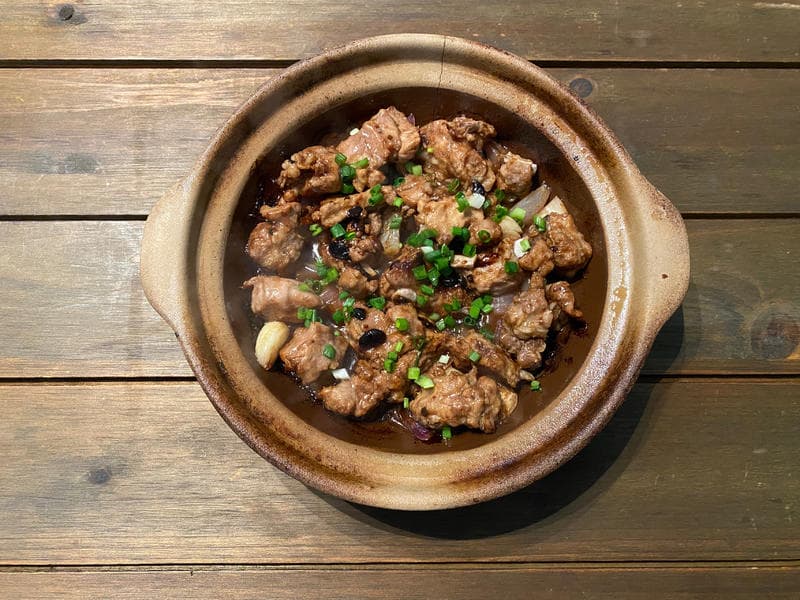
01Cantonese Sizzling Pork Ribs (Jue Jue Bao)
Cantonese sizzling pork ribs, or jue jue bao, cook over onion, ginger and garlic in a covered pot. A black bean marinade gives these Guangdong-style ribs their savory depth; moderate heat keeps the onion base from burning.
 02
02Steamed Pork Ribs with Black Beans
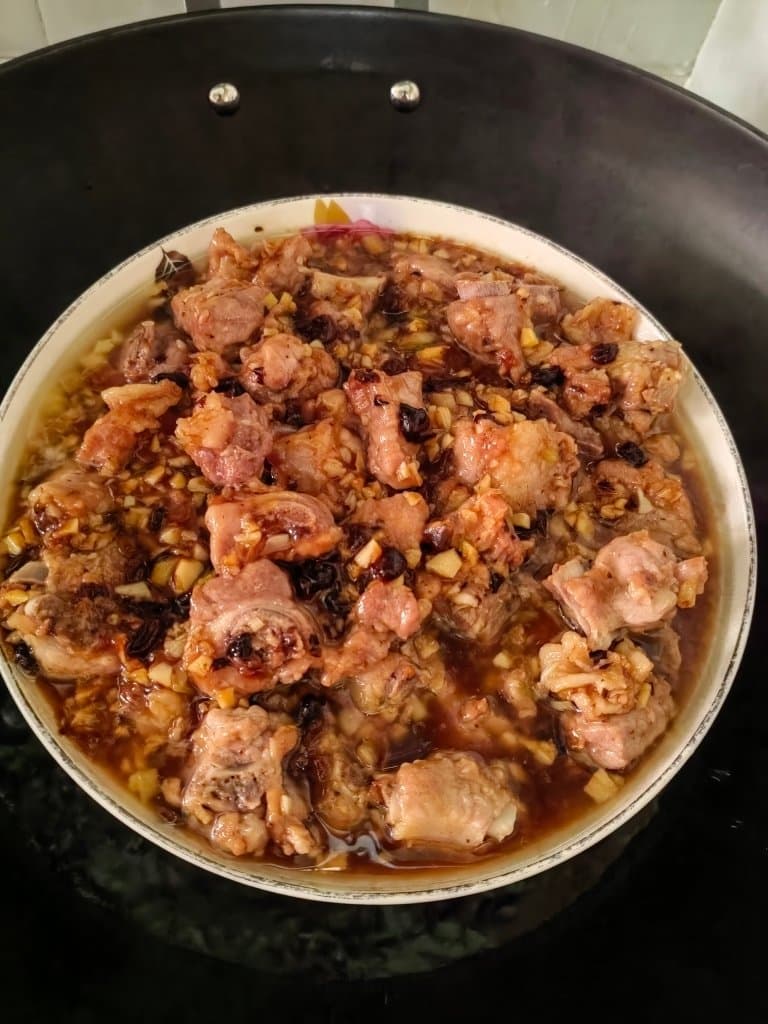
Small pork-rib pieces steamed with fermented black beans and garlic. Follow the illustrated preparation, single-layer steaming and doneness checks for a savory Cantonese dish to serve with rice.
 03
03Cantonese Steamed Pork Patty with Shiitake Mushrooms
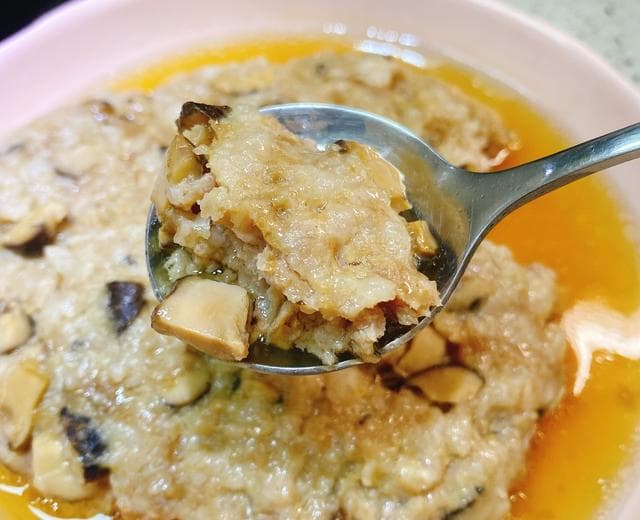
Cantonese steamed pork patty is a juicy layer of minced pork cooked on a shallow plate, with dried shiitake mushrooms and a little ginger-scallion water. The soft meat and savory juices are made for spooning over a bowl of rice.